
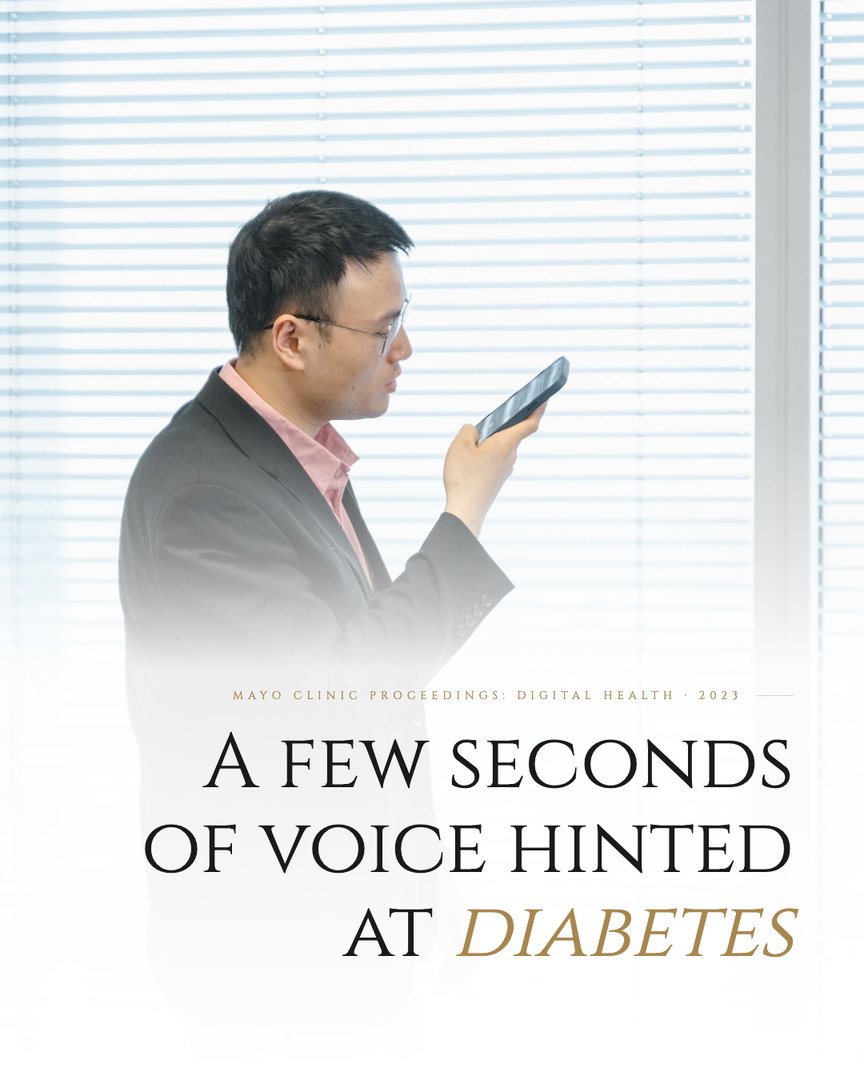
Researchers working with Klick Labs recorded a short fixed phrase from 267 people in India up to six times a day for two weeks, around 18,000 recordings in all, then measured acoustic features like pitch and jitter against each person's diabetes status.
Combined with age and body mass index, voice features identified diabetes with about 75 percent accuracy in women and 70 percent in men in cross-validation, with no blood draw. Pitch and its variability mattered most in women; loudness and its steadiness in men.
The acoustic differences are small enough that no clinician could hear them by ear, and the result has not yet been tested outside this one study's 267 participants, so it needs replication in a larger and more varied population before it could screen anyone. If it holds up, a phone microphone could become a cheap first pass before a confirmatory blood test.
Read the original study
Kaufman et al., Mayo Clinic Proceedings: Digital Health, 2023 · doi.org/10.1016/j.mcpdig.2023.08.005
The voice carried a blood sugar signature.
Source
- Kaufman, J. M., Thommandram, A., & Fossat, Y. (2023). Acoustic Analysis and Prediction of Type 2 Diabetes Mellitus Using Smartphone-Recorded Voice Segments. Mayo Clinic Proceedings Digital Health, 1(4), 534–544. https://doi.org/10.1016/j.mcpdig.2023.08.005