
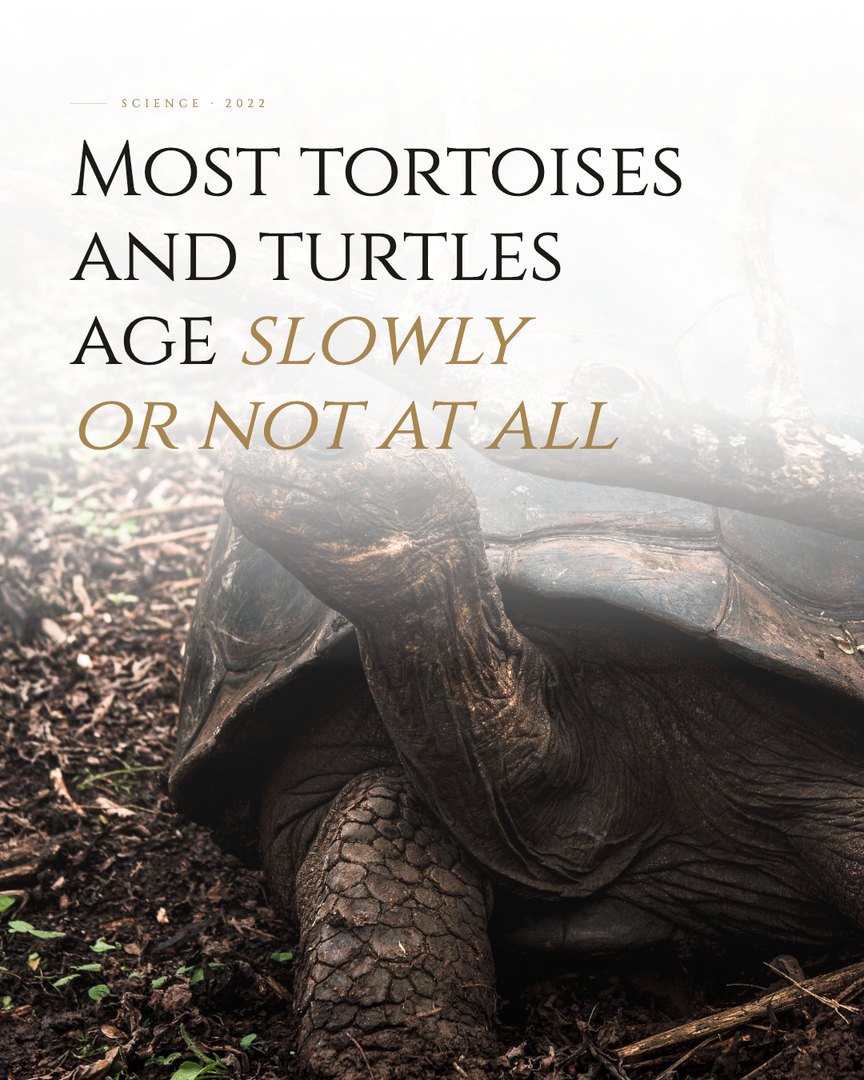
Researchers at the University of Southern Denmark tested that prediction using decades of zoo and aquarium records covering 52 species of turtles and tortoises, animals long rumored to barely age at all.
About 75 percent of the species studied showed slow or negligible senescence, meaning their risk of dying did not meaningfully rise with age, and roughly 80 percent of species aged more slowly than modern humans do. Heavier species tended to live longer, and size differences between males and females explained which sex lived longer.
Unlike most studied animals, several turtle and tortoise species appeared to slow their aging further when living conditions improved, suggesting their biological aging rate is not fixed the way it is in many other animals. The records come from zoos and aquariums rather than the wild, where predation and disease could change the picture, and the underlying cellular mechanism behind the pattern is still being investigated.
Read the original study
da Silva et al., Science, 2022 · doi.org/10.1126/science.abl7811
Some turtles barely age at all.
Source
- da Silva, R., Conde, D. A., Baudisch, A., & Colchero, F. (2022). Slow and negligible senescence among testudines challenges evolutionary theories of senescence. Science, 376(6600), 1466–1470. https://doi.org/10.1126/science.abl7811