
Physicians at the University of Virginia investigated a cluster of patients who developed anaphylaxis, swelling or hives three to six hours after eating beef, pork or lamb, a delay unlike any other known food allergy.
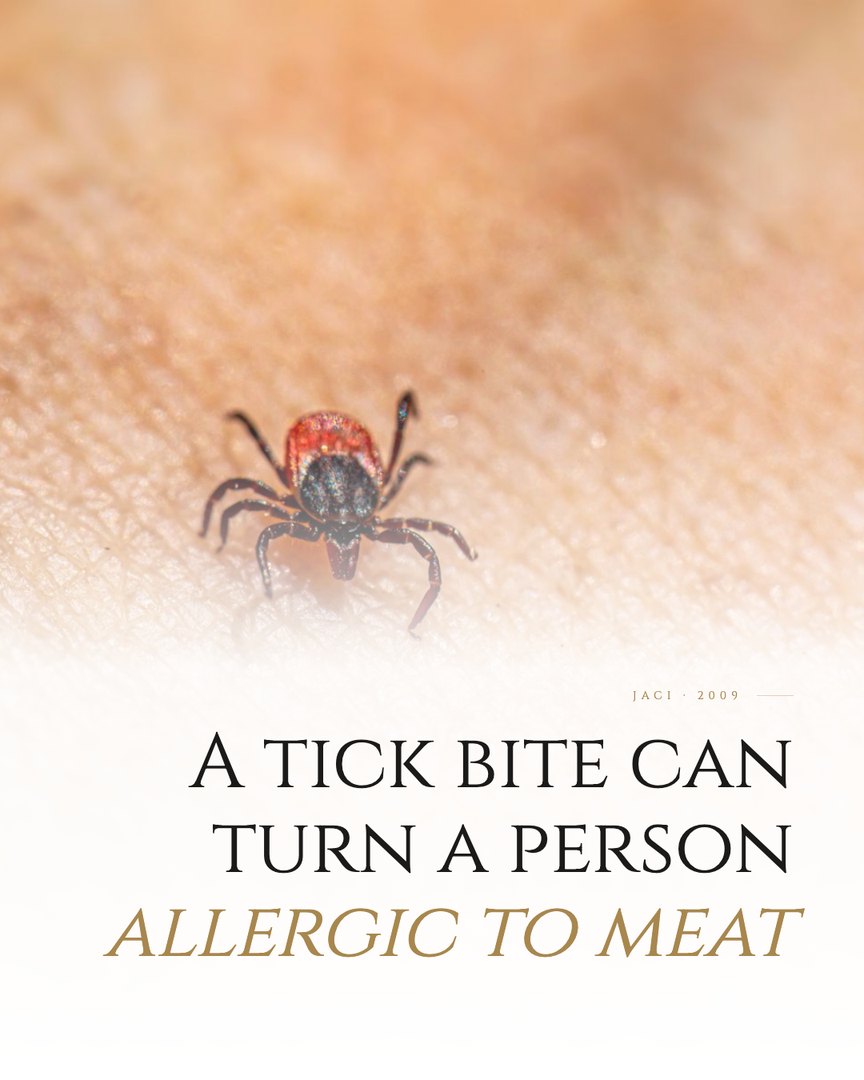
Blood testing found 24 patients carried IgE antibodies against alpha-gal, a sugar molecule found on the cells of nonprimate mammals but not on humans. Avoiding mammalian meat reduced or stopped their reactions, and later field work tied the first sensitization to bites from the lone star tick.
The delay between eating meat and reacting, three to six hours, had kept the condition hidden from standard allergy testing, which looks for reactions within minutes. The tick-bite link was established in follow-up research after this paper, not within it, and the allergy has since spread with the tick's range across the southern and eastern United States.
Read the original study
A bug bite rewrote what the body calls food.
Source
- Commins, S. P., Satinover, S. M., Hosen, J., Mozena, J., Borish, L., Lewis, B. D., Woodfolk, J. A., & Platts-Mills, T. A. E. (2009). Delayed anaphylaxis, angioedema, or urticaria after consumption of red meat in patients with IgE antibodies specific for galactose-alpha-1,3-galactose. The Journal of Allergy and Clinical Immunology, 123(2), 426–33. https://doi.org/10.1016/j.jaci.2008.10.052