
Researchers at Wayne State University tested RGN-259, an eye drop formulation of the peptide thymosin beta-4, in a small, placebo-controlled trial on patients with severe dry eye, some of it caused by graft-versus-host disease, a condition with few good treatment options.
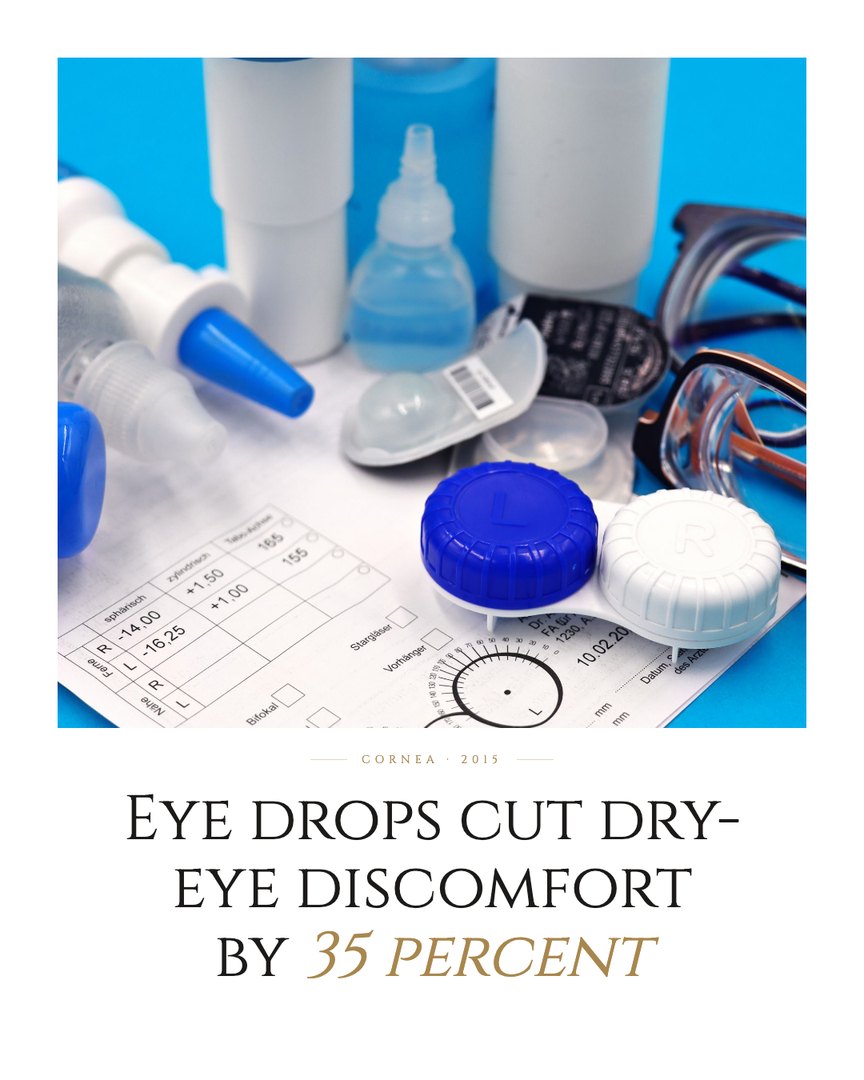
In the peer-reviewed trial, just nine patients were treated across two sites, with 12 eyes given the thymosin beta-4 drops and 6 eyes a placebo vehicle. By day 56, the treated group reported a 35.1 percent reduction in eye discomfort and a 59.1 percent reduction in corneal surface damage compared with placebo.
Nine patients is a small trial by any standard, run at just two sites, and the company developing the drops had a direct financial stake in the result, a conflict worth naming even though the statistics held up. The findings have since been extended into neurotrophic keratopathy, a different corneal condition, in larger phase 3 trials, which is the usual next step before a drug like this could reach wider approval.
Read the original study
Sosne et al., Cornea, 2015 · doi.org/10.1097/ICO.0000000000000379
Promising, small, and funded by the maker.
Source
- Sosne, G., Dunn, S. P., & Kim, C. (2015). Thymosin β4 significantly improves signs and symptoms of severe dry eye in a phase 2 randomized trial. Cornea, 34(5), 491–6. https://doi.org/10.1097/ICO.0000000000000379