
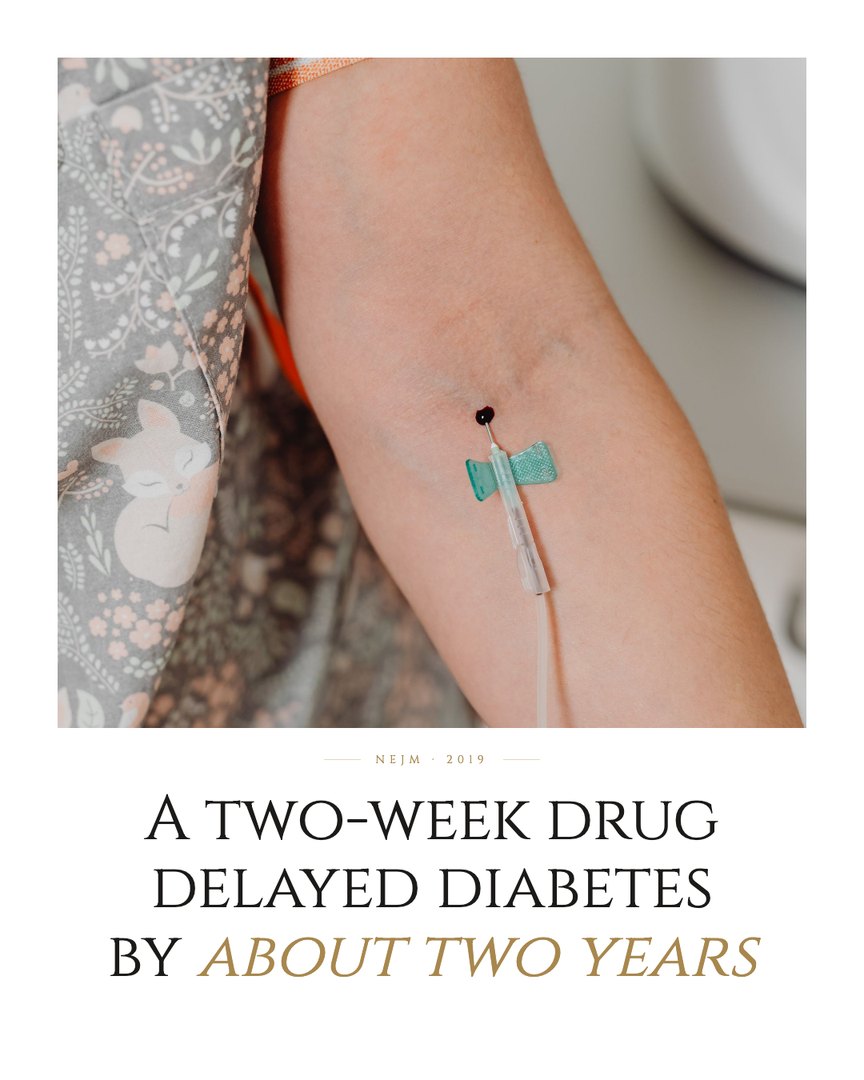
Researchers at Yale enrolled 76 relatives of type 1 diabetes patients who had blood markers showing high risk of developing the disease themselves, and gave half of them a single 14-day course of the antibody drug teplizumab, with the rest given a placebo infusion.
People who received teplizumab took a median of 48.4 months to be diagnosed with diabetes, compared with 24.4 months in the placebo group, roughly doubling the time before the disease appeared. By the end of follow-up, substantially fewer teplizumab recipients had progressed to diabetes than those on placebo.
A two-week course of medicine pushing back a diagnosis by roughly two years was unprecedented for type 1 diabetes, where no prior intervention had meaningfully delayed onset in at-risk people. The drug did not prevent diabetes outright in everyone, and the trial's relatives-only population raises the question of whether delay would be similar in people identified through broader population screening.
Read the original study
Two weeks of treatment bought two years of time.
Source
- Herold, K. C., Bundy, B. N., Long, S. A., Bluestone, J. A., DiMeglio, L. A., Dufort, M. J., Gitelman, S. E., Gottlieb, P. A., Krischer, J. P., Linsley, P. S., Marks, J. B., Moore, W., Moran, A., Rodriguez, H., Russell, W. E., Schatz, D., Skyler, J. S., Tsalikian, E., Wherrett, D. K., . . . Greenbaum, C. J. (2019). An Anti-CD3 Antibody, Teplizumab, in Relatives at Risk for Type 1 Diabetes. New England Journal of Medicine, 381(7), 603–613. https://doi.org/10.1056/NEJMoa1902226