
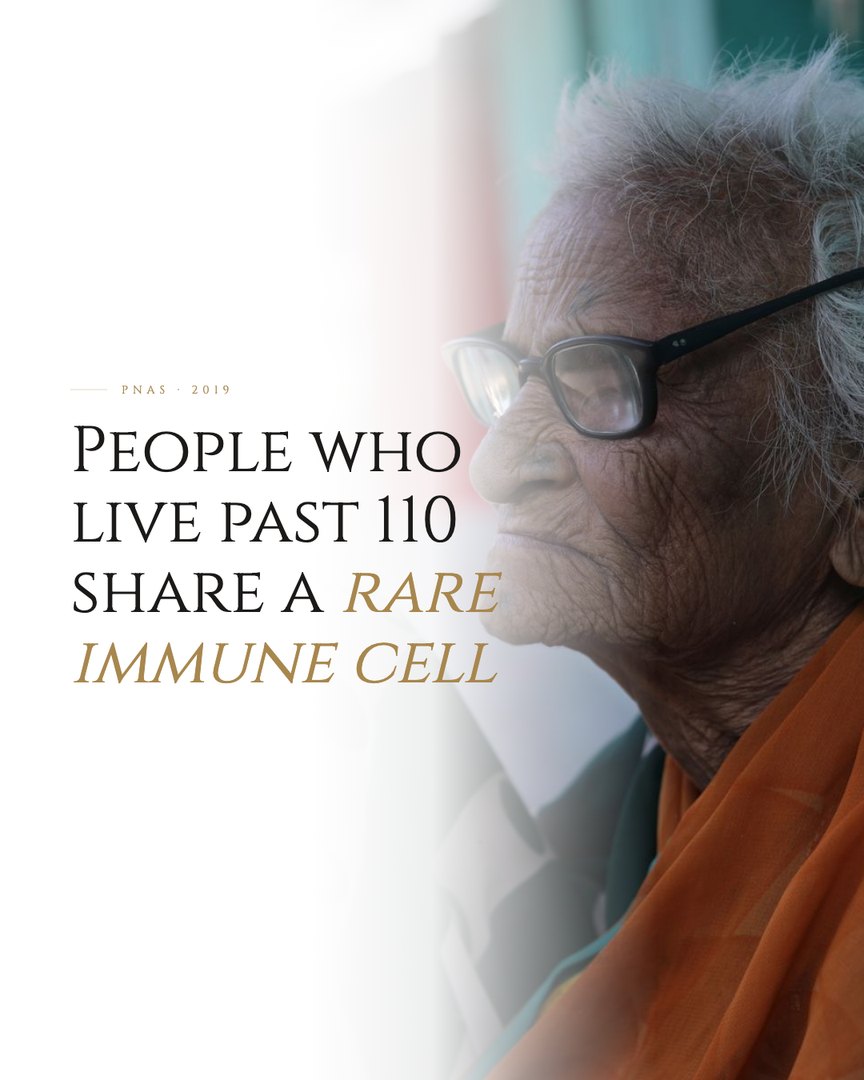
Researchers at the RIKEN Center for Integrative Medical Sciences in Japan ran single-cell analysis on blood from seven supercentenarians and five younger people, looking for what made their immune systems different.
Across 61,202 individual blood cells examined, supercentenarians carried a sharply higher proportion of a rare cell type, cytotoxic CD4 T cells, than younger people. In two of the supercentenarians studied in finer detail, the most common versions of these cells had expanded through clonal growth to make up 15 to 35 percent of all CD4 T cells in their blood.
These cells behaved almost identically to a different, better-known killer cell type at the genetic level, despite keeping the CD4 marker usually associated with helper cells rather than killers, and they produced immune signaling molecules when stimulated in the lab. The study looked at only a handful of long-lived people, so whether this cell expansion helps cause exceptional longevity or is simply a byproduct of it remains an open question.
Read the original study
Hashimoto et al., PNAS, 2019 · doi.org/10.1073/pnas.1907883116
An immune cell most people barely have.
Source
- Hashimoto, K., Kouno, T., Ikawa, T., Hayatsu, N., Miyajima, Y., Yabukami, H., Terooatea, T., Sasaki, T., Suzuki, T., Valentine, M., Pascarella, G., Okazaki, Y., Suzuki, H., Shin, J. W., Minoda, A., Taniuchi, I., Okano, H., Arai, Y., Hirose, N., & Carninci, P. (2019). Single-cell transcriptomics reveals expansion of cytotoxic CD4 T cells in supercentenarians. Proceedings of the National Academy of Sciences of the United States of America, 116(48), 24242–24251. https://doi.org/10.1073/pnas.1907883116