
Researchers at the University of Chicago tested the sense of smell in a large national sample of older adults using five scented felt-tip pens, then tracked who was still alive five years later.
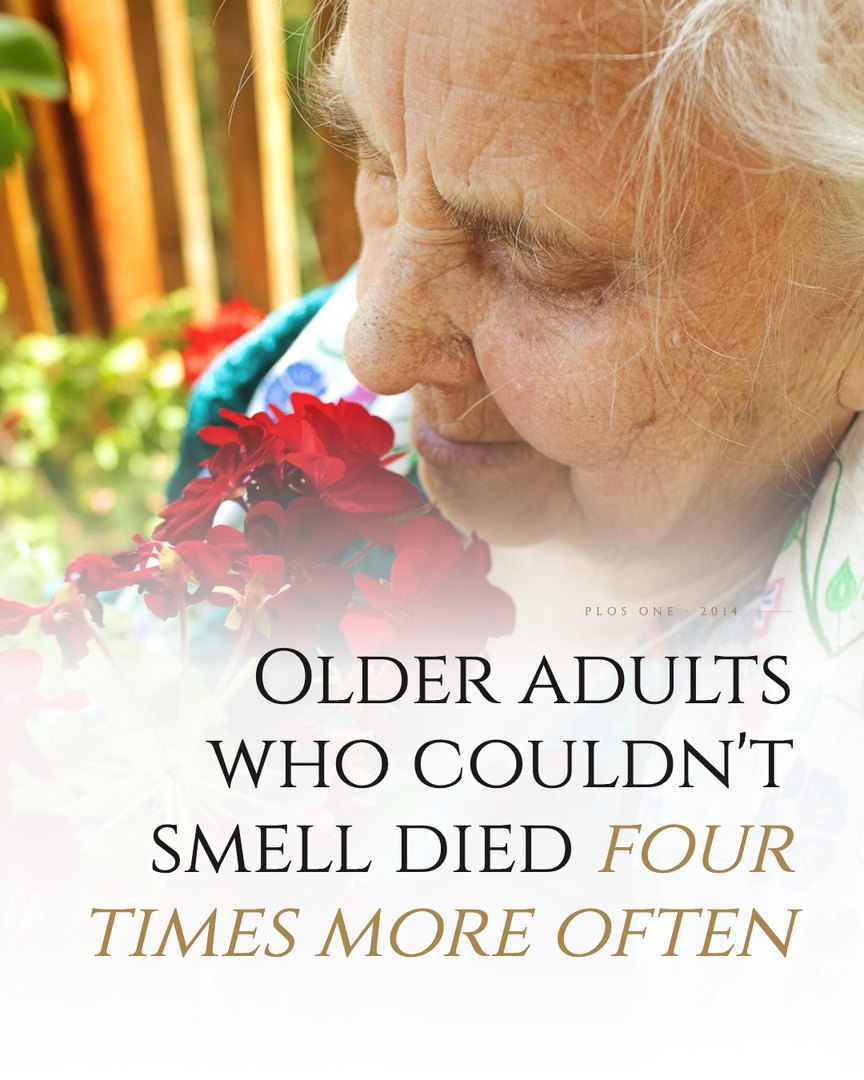
Among 3,005 adults aged 57 to 85 in the National Social Life, Health, and Aging Project, those who could not identify any of the common odors presented died within five years at four times the rate of those with a normal sense of smell, and still had more than three times the odds of death after accounting for other major illnesses.
The association held after adjusting for age, nutrition, cognitive status, and existing disease, which argued against smell loss being a simple side effect of some other known illness doing the real damage. The researchers suggested smell loss may reflect broader cellular aging or cumulative toxic exposure, but the study could not pin down a single cause, and it cannot say that restoring smell would change the underlying risk.
Read the original study
Pinto et al., PLoS ONE, 2014 · doi.org/10.1371/journal.pone.0107541
A missing scent predicted more than anyone expected.
Source
- Pinto, J. M., Wroblewski, K. E., Kern, D. W., Schumm, L. P., & McClintock, M. K. (2014). Olfactory dysfunction predicts 5-year mortality in older adults. PLOS ONE, 9(10), e107541. https://doi.org/10.1371/journal.pone.0107541