
Obstetrician Ignaz Semmelweis noticed the one habit that separated the two wards: the doctors and students came straight from the autopsy room before examining patients, and the midwives never touched a corpse.
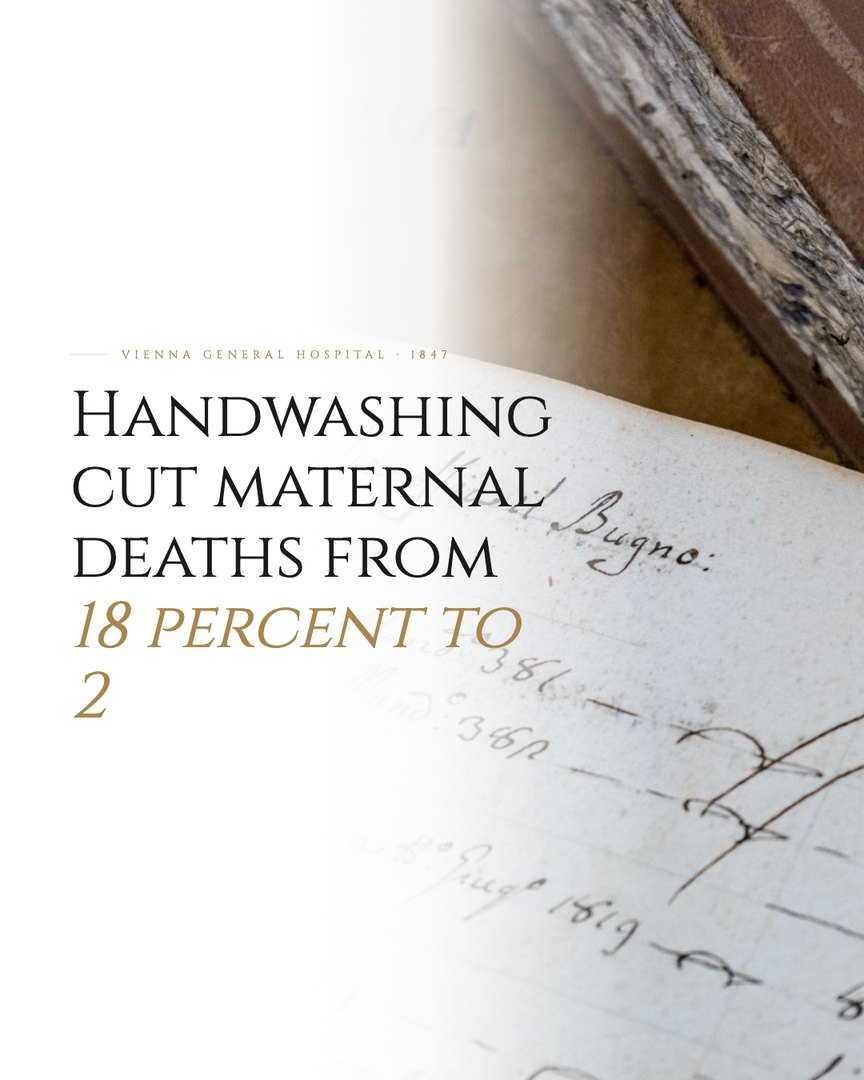
In April 1847, before any change, 18.3 percent of mothers on the doctors' ward died of childbed fever. Semmelweis ordered every doctor to scrub their hands in a chlorinated lime solution before each exam. By June the death rate had fallen to about 2 percent, and it stayed there through the summer.
Semmelweis had no germ theory to explain the result; he could only describe "cadaverous particles" on unwashed hands. Without a mechanism to point to, the medical establishment largely dismissed him, and he died in an asylum in 1865, years before Louis Pasteur and Joseph Lister gave the rest of medicine a reason to believe him.
Read the original study
Best and Neuhauser, Quality and Safety in Health Care, 2004 · doi.org/10.1136/qhc.13.3.233
The proof arrived decades before the explanation.
Source
- Best, M. (2004). Ignaz Semmelweis and the birth of infection control. Quality and Safety in Health Care, 13(3), 233–234. https://doi.org/10.1136/qhc.13.3.233