
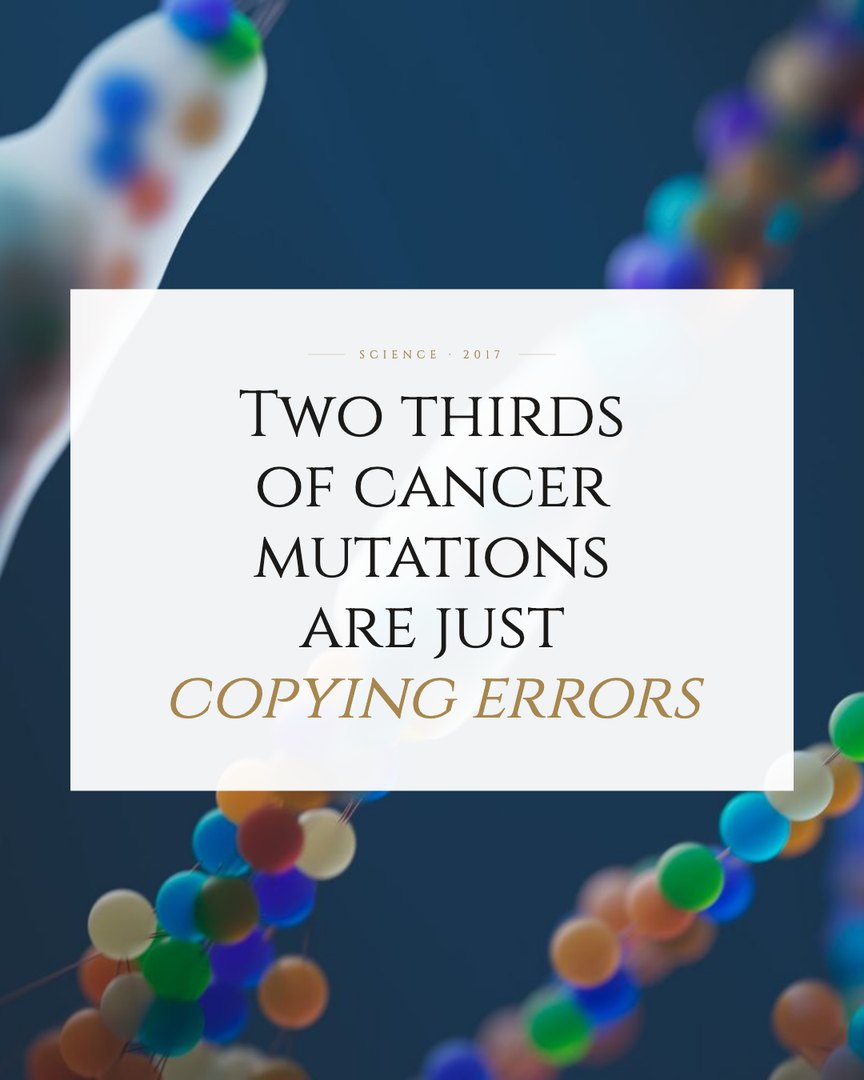
Researchers at Johns Hopkins analyzed genome sequencing and epidemiological data across 32 cancer types and found that about two-thirds of the mutations behind these cancers come from random errors made during ordinary cell division.
Cristian Tomasetti, Lu Li, and Bert Vogelstein sorted cancer-causing mutations into three sources: inherited, environmental, and replicative, meaning mistakes that happen naturally whenever a healthy cell copies its DNA to divide. Across the cancer types studied, replicative errors accounted for roughly 66 percent of mutations, outweighing the other two sources combined.
The finding does not excuse smoking or diet, which still drive specific, well-documented cancers. It explains something those factors cannot: why cancer can strike people with no risk factors at all, and why organs that divide more often, like the colon, develop cancer more frequently than ones that divide rarely. The exact two-thirds figure is still debated by other researchers.
Read the original study
Tomasetti et al., Science, 2017 · doi.org/10.1126/science.aaf9011
Luck turned out to be a real variable.
Source
- Tomasetti, C., Li, L., & Vogelstein, B. (2017). Stem cell divisions, somatic mutations, cancer etiology, and cancer prevention. Science, 355(6331), 1330–1334. https://doi.org/10.1126/science.aaf9011