
Physicians at the University of Iowa tested whether deliberately reintroducing a harmless intestinal worm could calm the disease in 29 patients with active Crohn's, based on the idea that human immune systems evolved expecting parasites to be present.
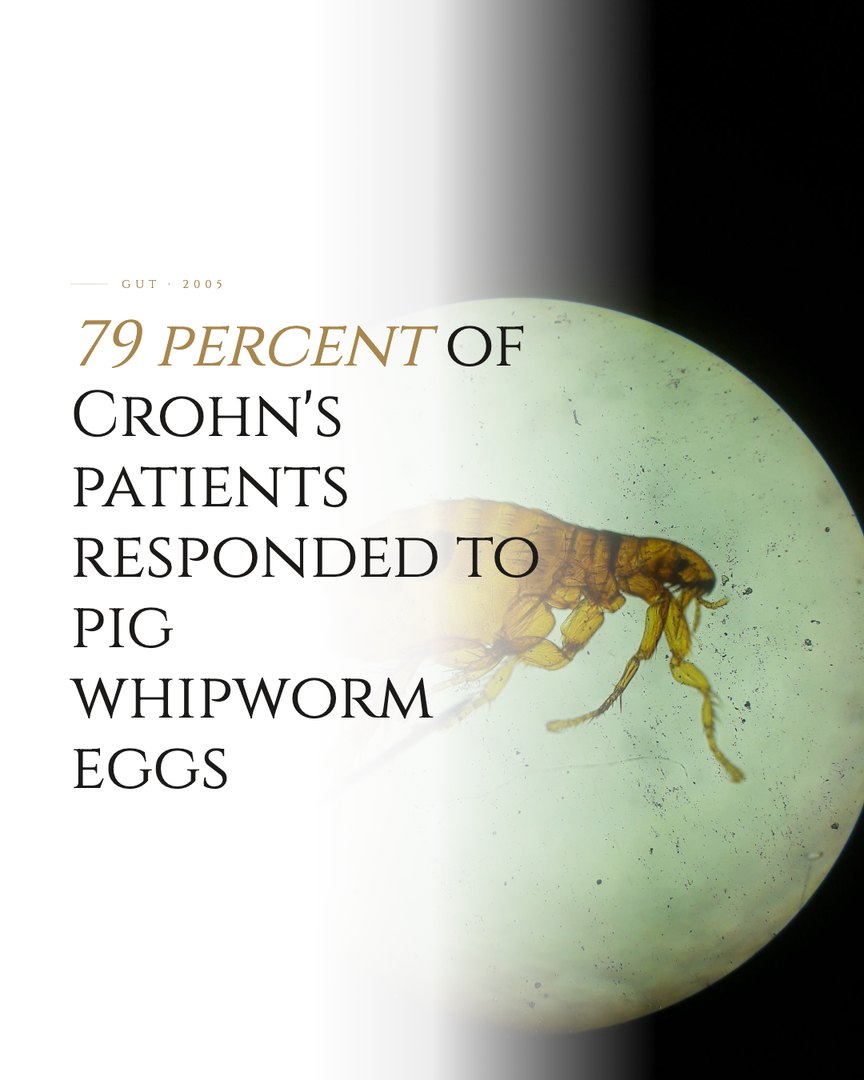
Patients drank a dose of live Trichuris suis, a pig whipworm that cannot complete its life cycle in humans, every three weeks for 24 weeks. By week 24, 23 of the 29 patients, about 79 percent, had improved enough to count as responders, and 21, about 72 percent, reached remission.
There was no placebo group and no blinding, so some of the improvement could reflect patients simply getting attention and monitoring rather than the worms themselves. No serious side effects appeared. The result helped launch a wave of follow-up trials testing helminth therapy for Crohn's and other immune diseases, but a larger placebo-controlled trial in 2017 found no benefit over placebo.
Read the original study
A pig parasite, tried in place of the worms hygiene removed.
Source
- Summers, R. W., Elliott, D. E., Urban, J. F., Thompson, R., & Weinstock, J. V. (2005). Trichuris suis therapy in Crohn's disease. Gut, 54(1), 87–90. https://doi.org/10.1136/gut.2004.041749