
Researchers at the Fred Hutchinson Cancer Research Center in Seattle searched for male DNA, which can only have come from a male fetus, in brain tissue donated by women after death.
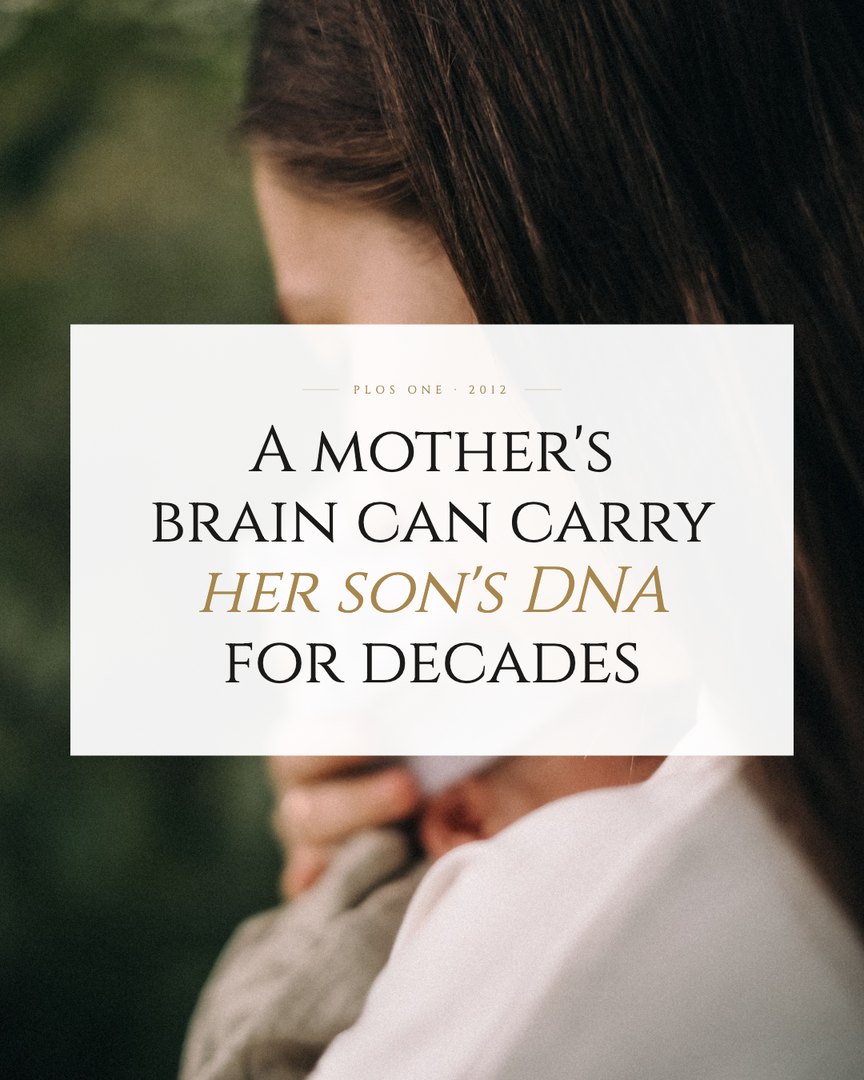
Using a sensitive genetic test for a Y-chromosome marker, the team found male DNA scattered across multiple brain regions in 37 of 59 women studied, about 63 percent. The oldest woman with male DNA in her brain had died at 94.
Women with Alzheimer's disease tended to have lower rates and concentrations of this male DNA in their brains than women without the disease, though the study could not determine whether that difference was a cause of the disease or simply a result of it. Fetal cells have also been found in other maternal organs and are being studied for a possible role in both disease and tissue repair.
Read the original study
Chan et al., PLoS ONE, 2012 · doi.org/10.1371/journal.pone.0045592
Her child's cells, still living inside her.
Source
- Chan, W. F. N., Gurnot, C., Montine, T. J., Sonnen, J. A., Guthrie, K. A., & Nelson, J. L. (2012). Male microchimerism in the human female brain. PLOS ONE, 7(9), e45592. https://doi.org/10.1371/journal.pone.0045592