
Scientists at Bangor University in Wales later recounted the growth bands in its shell, the same way tree rings are counted, and cross-checked the count against the clam's radiocarbon signature. The animal turned out to be far older than the original survey had realized.
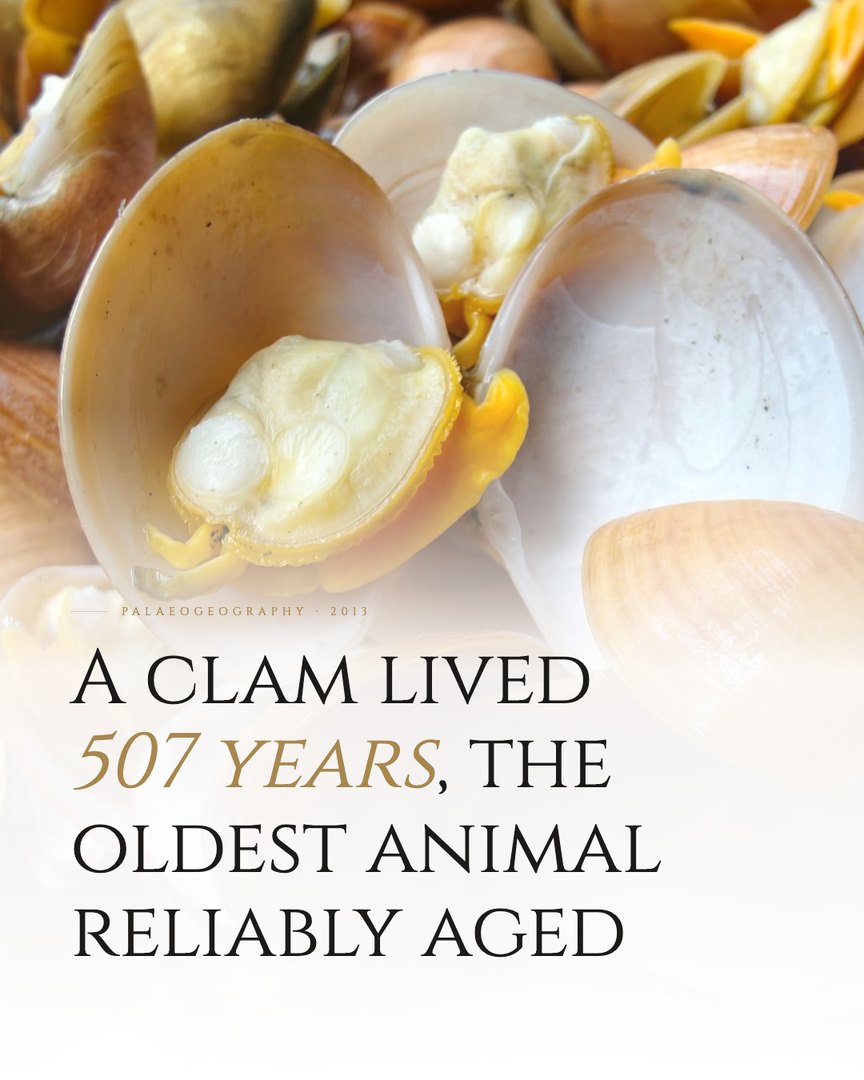
The clam's shell carried 507 annual growth bands, confirmed by its carbon-14 signature, making it the oldest known individual animal ever reliably aged, a title it still holds. The species, Arctica islandica or the ocean quahog, is known for slow growth and long life, but no previous specimen had been dated anywhere close to this one.
The animal, later nicknamed Ming after the Chinese dynasty ruling when it was born, had died when it was frozen on board after collection, standard practice for such surveys, long before researchers realized its age. Its growth bands also preserved a multi-century record of ocean temperature, useful to climate scientists independent of the longevity record itself.
Read the original study
Five hundred and seven years, one shell.
Source
- Butler et al., Palaeogeography, Palaeoclimatology, Palaeoecology, 2013. https://doi.org/10.1016/j.palaeo.2012.01.016