
In 2022, the RESTORE trial, run by NHS Blood and Transplant with the Universities of Bristol and Cambridge, transfused red blood cells grown from stem cells in a laboratory into human volunteers for the first time anywhere.
Scientists grew the cells from donated stem cells over about three weeks, then gave small test amounts, around five to ten milliliters, to healthy volunteers. Each volunteer later received a matching amount of their own type of standard donated blood, so researchers could compare how long each batch of cells survived in the bloodstream.
At least two volunteers received the lab-grown cells with no adverse effects reported, and the trial aimed to enroll at least ten people in total to measure cell lifespan precisely. Lab-grown blood is not meant to replace donation, which stays far cheaper; researchers see it eventually supplying rare blood types and patients who develop resistance to normal donor blood.
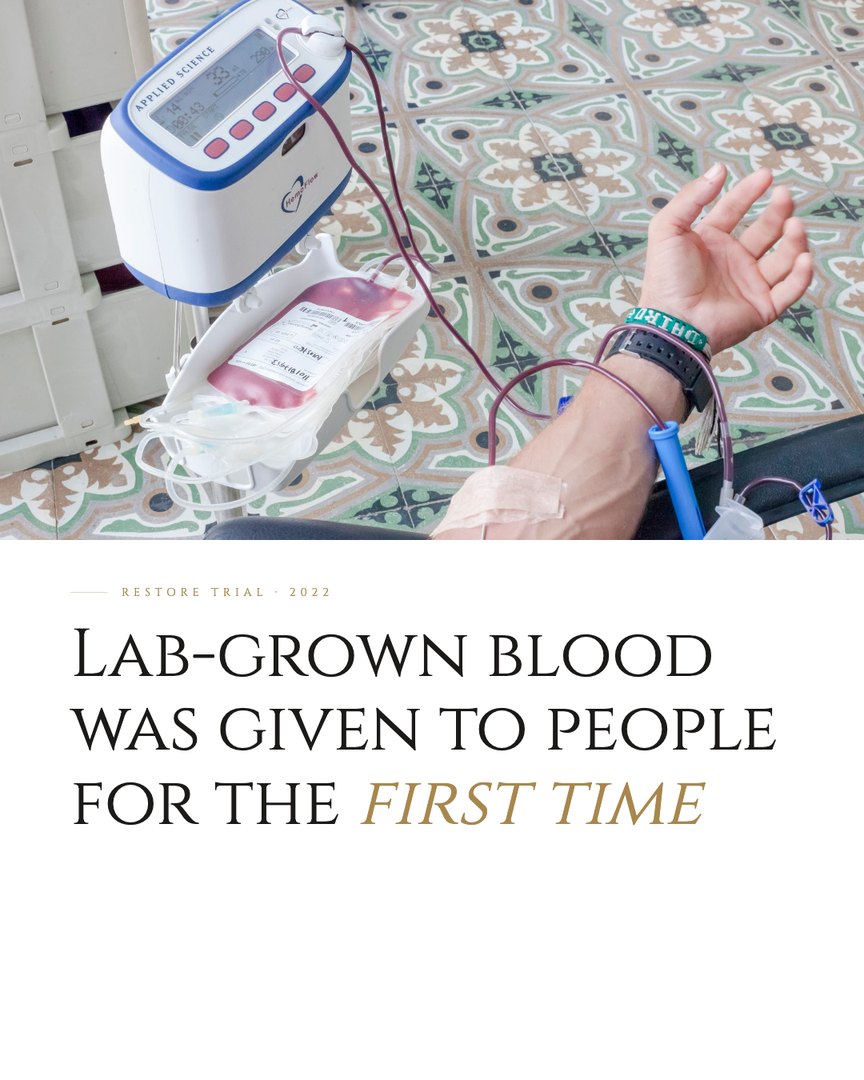
Blood grown, not given, for the first time.
Source
- NHS Blood and Transplant, RESTORE Trial, 2022 · University of Bristol and University of Cambridge