
Researchers at Imperial College London pulled together 58 studies of the fabella published between 1875 and 2018, covering populations around the world, to see whether its disappearance was continuing or reversing.
The review found the opposite of a steady decline. Median prevalence rose from about 7.6 percent around 1900 to about 31 percent by 2000, about a 3.5-fold increase, while the team's Korean CT study found the bone in 52.8 percent of people. Other sesamoid bones elsewhere in the body showed no such shift over the same period.
The team's leading explanation was mechanical: better nutrition over the 20th century made people taller and heavier, lengthening the calf muscle and shin bone and putting more tension through the tendon where the fabella forms, encouraging the bone to calcify. The fabella has clinical relevance because it can catch, click, or cause pain behind the knee, so a rising prevalence matters for knee surgeons.
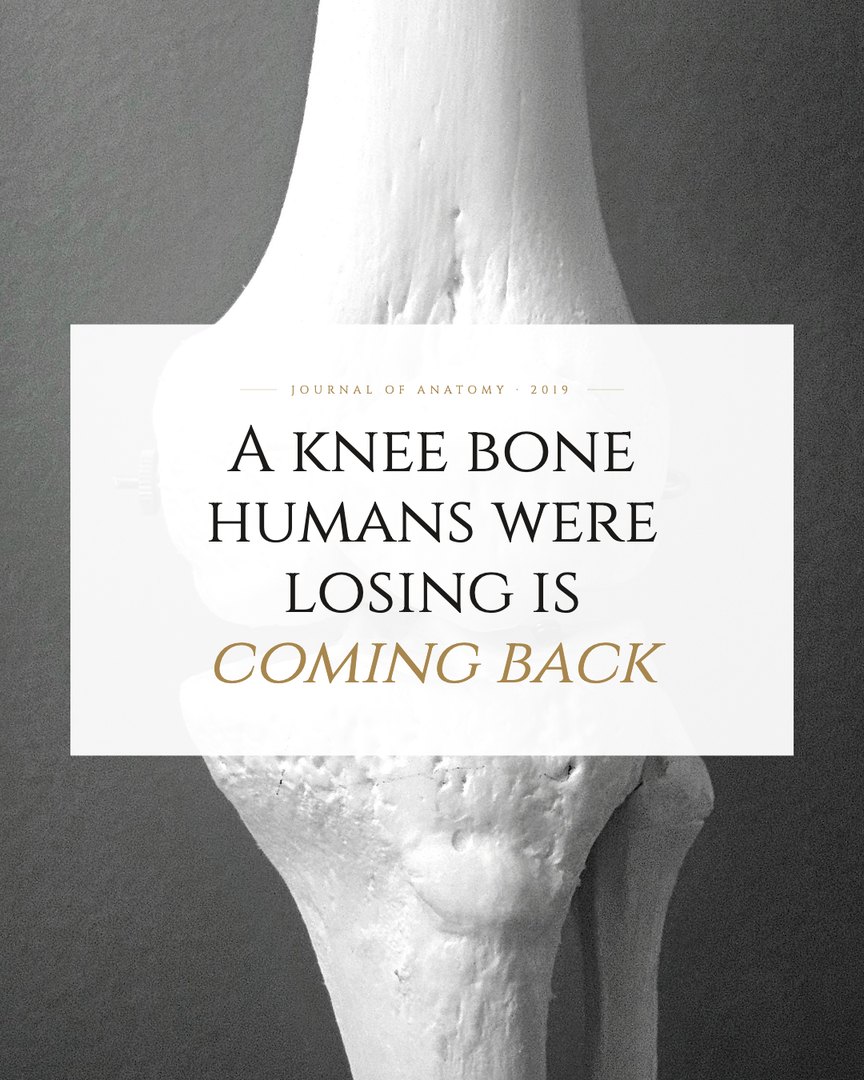
Read the original study
Berthaume et al., Journal of Anatomy, 2019 · doi.org/10.1111/joa.12994
A vanishing bone is now common again.
Source
- Berthaume, M. A., Di Federico, E., & Bull, A. M. J. (2019). Fabella prevalence rate increases over 150 years, and rates of other sesamoid bones remain constant: a systematic review. Journal of Anatomy, 235(1), 67–79. https://doi.org/10.1111/joa.12994