
In 2012 a team at Northwestern University, working with a cell therapy developed at the University of Louisville, tried transplanting a patient's new kidney alongside specially processed stem cells from the same donor, hoping to retrain the immune system to treat the organ as its own.
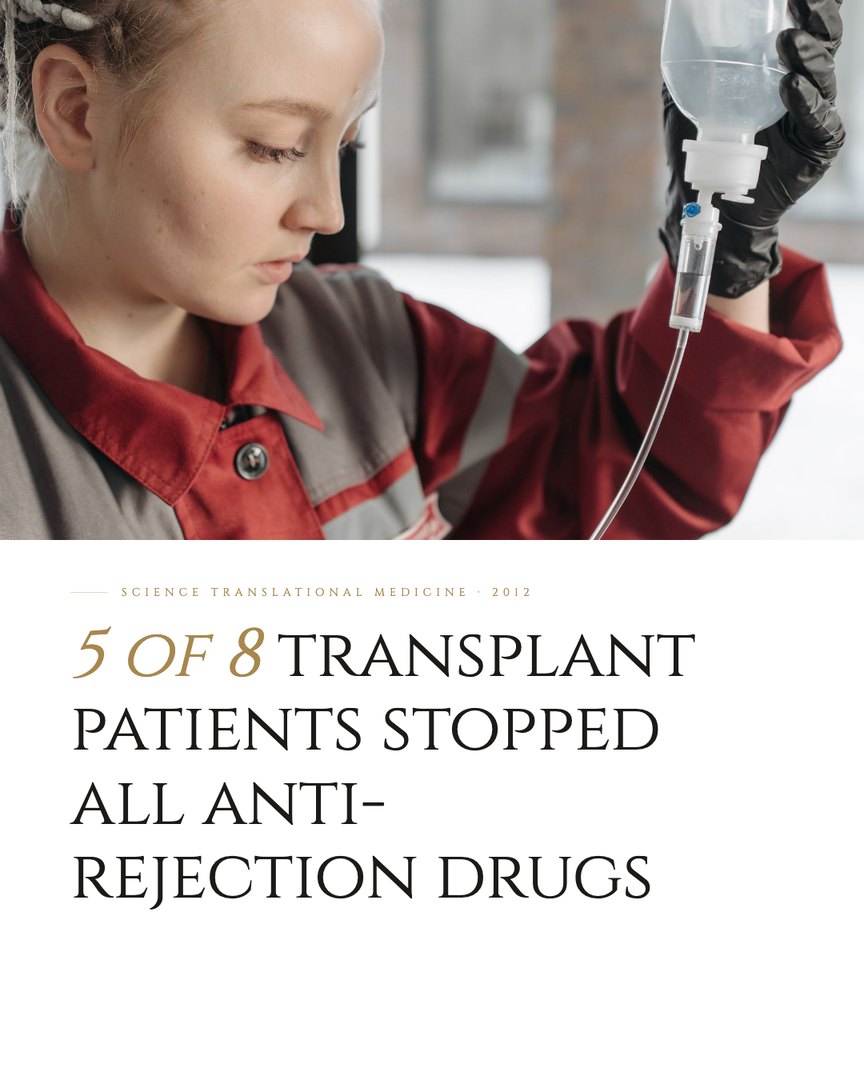
Joseph Leventhal's team gave eight patients a kidney plus blood stem cells from HLA-mismatched living donors, after brief conditioning meant to let both immune systems coexist. Five of the eight developed durable mixed chimerism and were weaned off every immunosuppressive drug within a year, with stable graft function and no rejection.
Two others had only temporary chimerism and stayed on low-dose anti-rejection medication; one developed a serious viral infection and a blocked kidney artery. The study was a small pilot of eight people, and the cell-processing protocol is specialized and not widely available. Drug-free tolerance remains an experimental goal rather than standard care.
Read the original study
Leventhal et al., Science Translational Medicine, 2012 · doi.org/10.1126/scitranslmed.3003509
Five patients, no more anti-rejection drugs.
Source
- Leventhal, J., Abecassis, M., Miller, J., Gallon, L., Ravindra, K., Tollerud, D. J., King, B., Elliott, M. J., Herzig, G., Herzig, R., & Ildstad, S. T. (2012). Chimerism and tolerance without GVHD or engraftment syndrome in HLA-mismatched combined kidney and hematopoietic stem cell transplantation. Science Translational Medicine, 4(124), 124ra28. https://doi.org/10.1126/scitranslmed.3003509