
In 2024, researchers at Stanford University studied ibogaine, a psychoactive alkaloid from the African shrub Tabernanthe iboga, paired with magnesium to protect the heart, in thirty Special Operations veterans with traumatic brain injury.
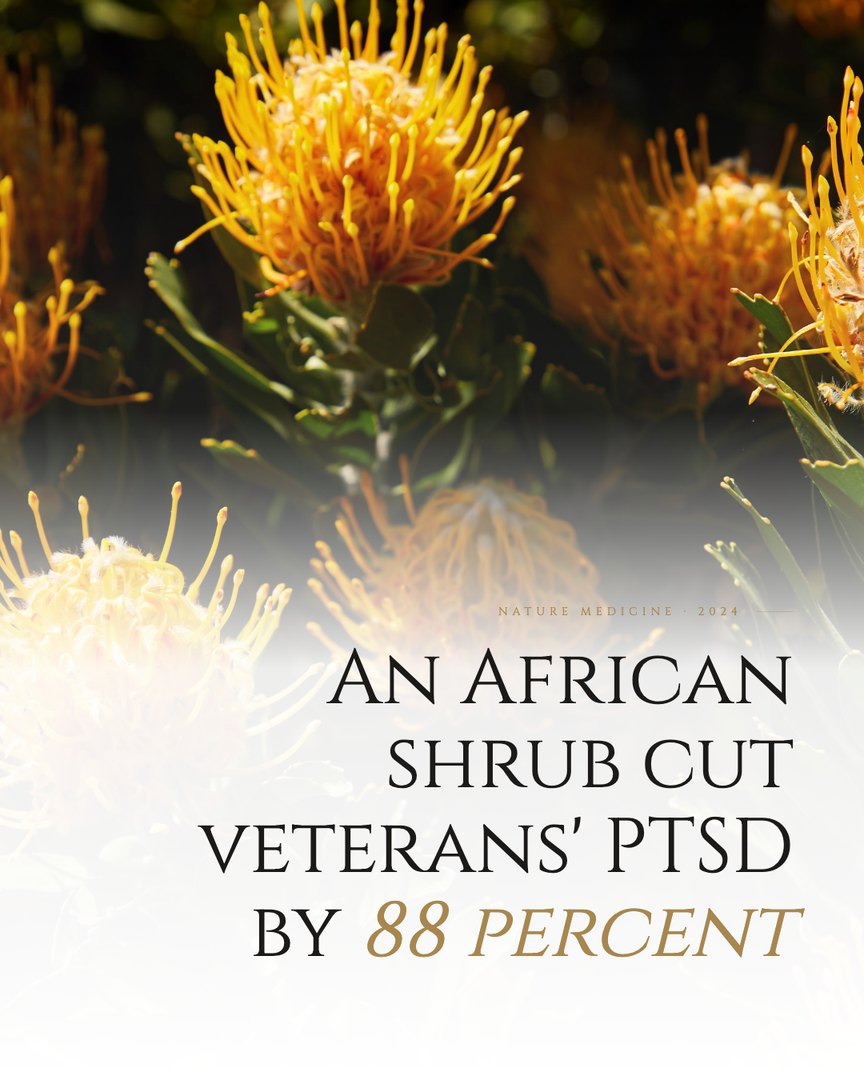
Because ibogaine is not approved in the United States, the veterans traveled to a clinic in Mexico for a single treatment, supervised by Stanford physicians who measured symptoms before and after. PTSD symptom scores fell by 88 percent, disability ratings improved sharply, and the effects held at one month.
Depression and anxiety scores fell by similarly large margins, and several veterans who had been suicidal before treatment reported no suicidal thoughts afterward. The study had no placebo group and only thirty participants at a single site, so the Stanford team called the results promising rather than proof, and larger controlled trials are now being planned.
Read the original study
Cherian et al., Nature Medicine, 2024 · doi.org/10.1038/s41591-023-02705-w
Thirty veterans, one treatment, an 88 percent drop.
Source
- Cherian, K. N., Keynan, J. N., Anker, L., Faerman, A., Brown, R. E., Shamma, A., Keynan, O., Coetzee, J. P., Batail, J.-M., Phillips, A., Bassano, N. J., Sahlem, G. L., Inzunza, J., Millar, T., Dickinson, J., Rolle, C. E., Keller, J., Adamson, M., Kratter, I. H., & Williams, N. R. (2024). Magnesium–ibogaine therapy in veterans with traumatic brain injuries. Nature Medicine, 30(2), 373–381. https://doi.org/10.1038/s41591-023-02705-w