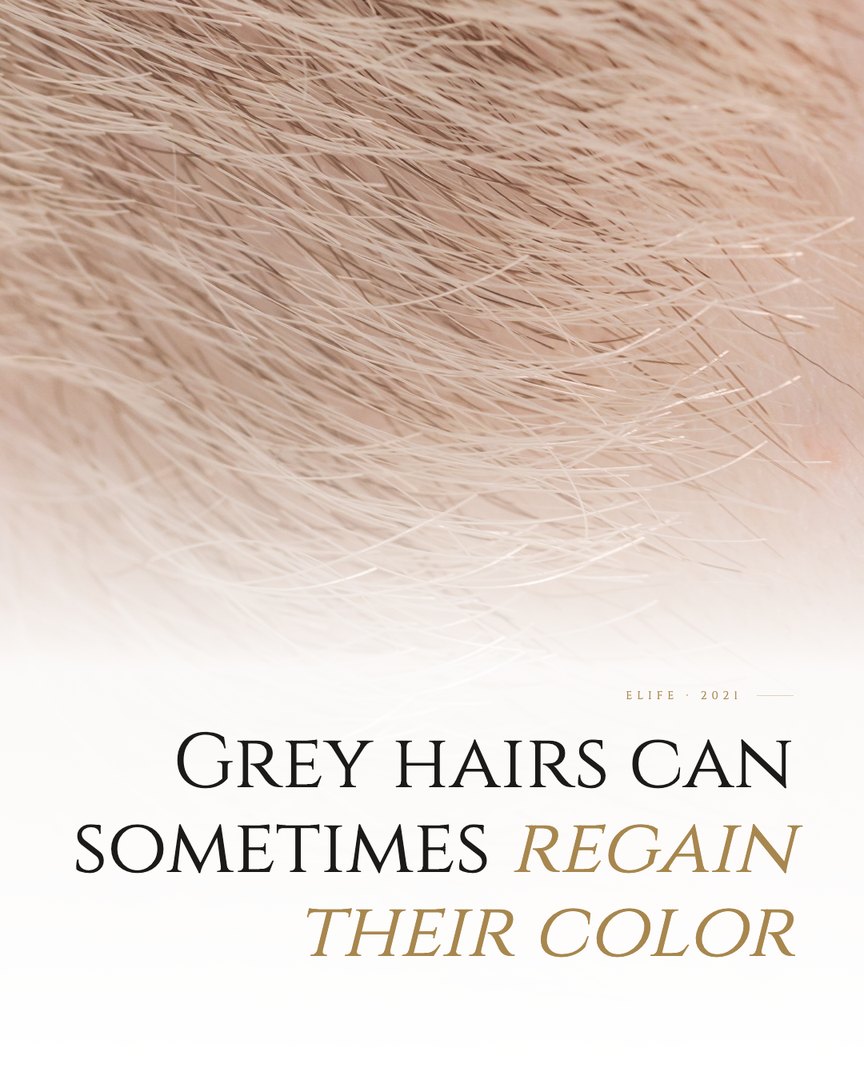
Researchers at Columbia University mapped color changes along individual human hairs and found strands that had gone grey, then regained pigment, in two donors timed to periods of lower stress.
Ayelet Rosenberg, in Martin Picard's lab, sliced single hairs into segments representing about an hour of growth each, then measured pigment in every segment across 14 donors. Several hairs showed grey bands that later returned to color, and in the two donors assessed, those bands lined up with periods they recalled as less stressful.
Molecular analysis of the white segments found higher levels of proteins tied to mitochondria and energy metabolism, suggesting the hair's pigment cells respond to the body's stress chemistry in real time rather than declining on a fixed schedule. The sample was small and relied on people's memory of when they felt stressed, and a larger study is the natural next step.
Read the original study
Grey hair is not always a one-way door.
Source
- Rosenberg, A. M., Rausser, S., Ren, J., Mosharov, E. V., Sturm, G., Ogden, R. T., Patel, P., Kumar Soni, R., Lacefield, C., Tobin, D. J., Paus, R., & Picard, M. (2021). Quantitative mapping of human hair greying and reversal in relation to life stress. eLife, 10, e67437. https://doi.org/10.7554/elife.67437