
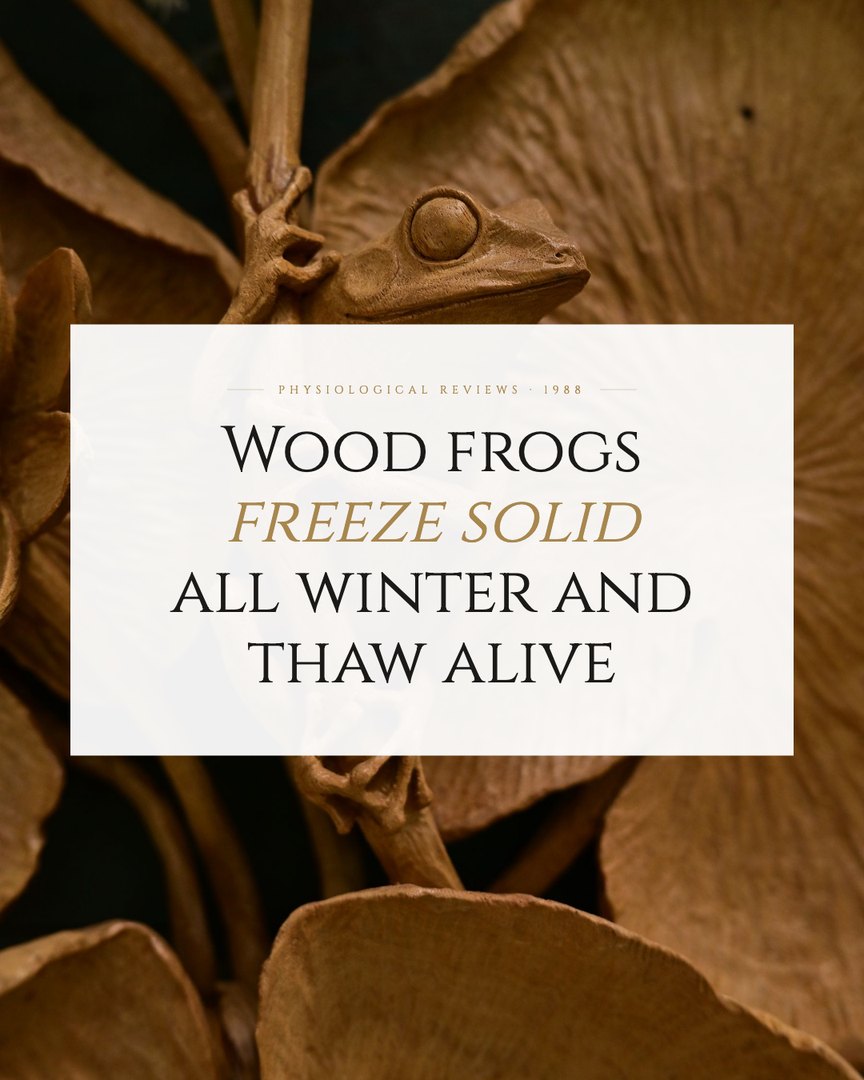
Researchers at Carleton University in Ottawa, Kenneth and Janet Storey, studied wood frogs that spend winter buried under leaf litter in regions where the ground itself freezes, to work out how the frogs kept surviving it.
As ice began forming on a frog's skin, its liver flooded the bloodstream with glucose, a cryoprotectant that filled cells and kept ice crystals from forming inside them, while ice formed only in the spaces between cells. Heart and breathing stop entirely, and up to roughly two thirds of the frog's body water can freeze solid.
When temperatures rose again, the frog's heart restarted and breathing resumed within hours, with no apparent organ damage from weeks spent frozen. The Storeys' review laid out the biochemistry behind the survival strategy and helped launch a research field that still studies freeze tolerance today for clues toward better preserving human organs and tissue for transplant, an application not yet achieved.
Read the original study
Storey and Storey, Physiological Reviews, 1988 · doi.org/10.1152/physrev.1988.68.1.27
Frozen solid, then back to hopping within a day.
Source
- Storey, K. B., & Storey, J. M. (1988). Freeze tolerance in animals. Physiological Reviews, 68(1), 27–84. https://doi.org/10.1152/physrev.1988.68.1.27