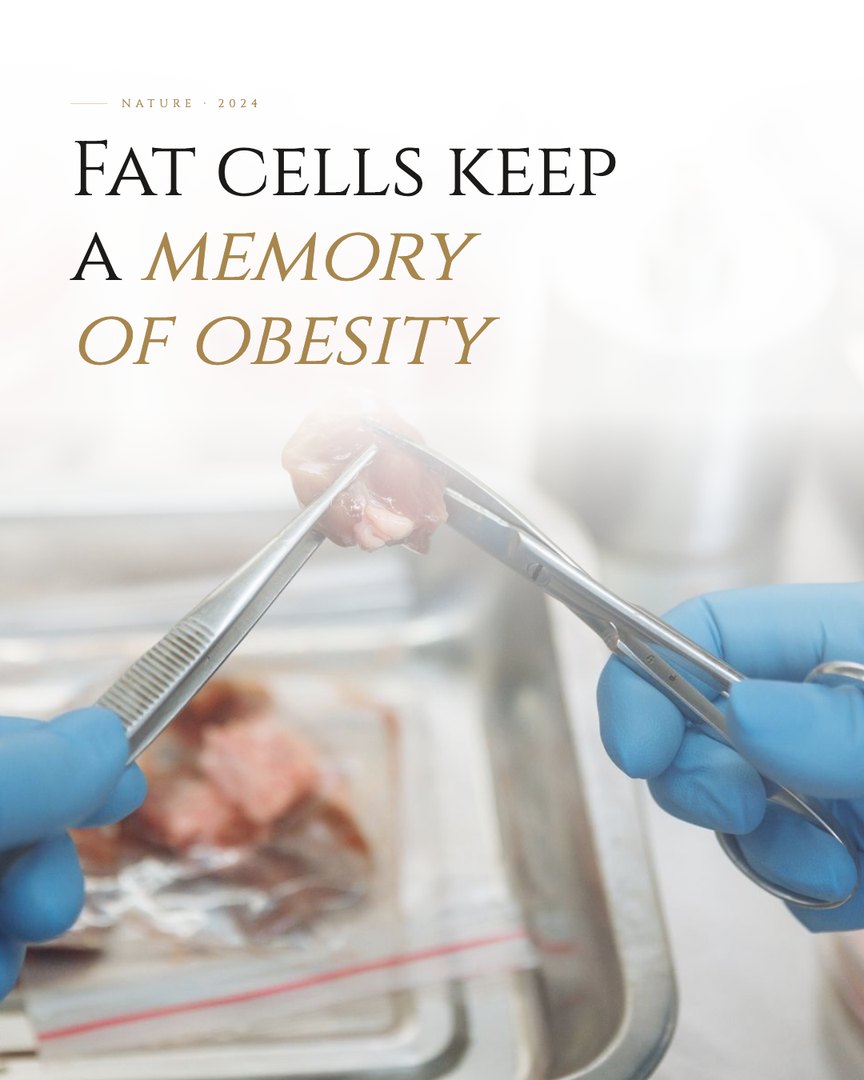
Researchers at ETH Zurich studied fat tissue from mice and from formerly obese people after major weight loss and found that mouse fat cells retain chemical marks left over from the earlier obese state.
Ferdinand von Meyenn's team, with Laura Hinte leading the work, found that obesity altered chemical marks at thousands of sites in mouse fat cells, and many of those changes persisted even after substantial weight loss. Mice carrying this leftover pattern regained weight faster than mice without it once given access to a high-fat diet again.
Human fat tissue from bariatric surgery patients, drawn from hospitals in Stockholm, Leipzig, Dresden, and Karlsruhe, showed a consistent pattern at the level of gene activity, though the team measured the underlying chemical marks directly only in the mice. The work reframes weight regain as partly a property of the fat cells themselves rather than just behavior, and treatments that reverse the chemical marks are still an early-stage goal.
Read the original study
Hinte et al., Nature, 2024 · doi.org/10.1038/s41586-024-08165-7
The fat cells never fully forgot.
Source
- Hinte, L. C., Castellano-Castillo, D., Ghosh, A., Melrose, K., Gasser, E., Noé, F., Massier, L., Dong, H., Sun, W., Hoffmann, A., Wolfrum, C., Rydén, M., Mejhert, N., Blüher, M., & von Meyenn, F. (2024). Adipose tissue retains an epigenetic memory of obesity after weight loss. Nature, 636(8042), 457–465. https://doi.org/10.1038/s41586-024-08165-7