
Researchers at the University of Utah set out to explain the mismatch. They compared cancer death rates across 36 mammal species and examined the elephant genome for genes that might explain the unusual resistance.
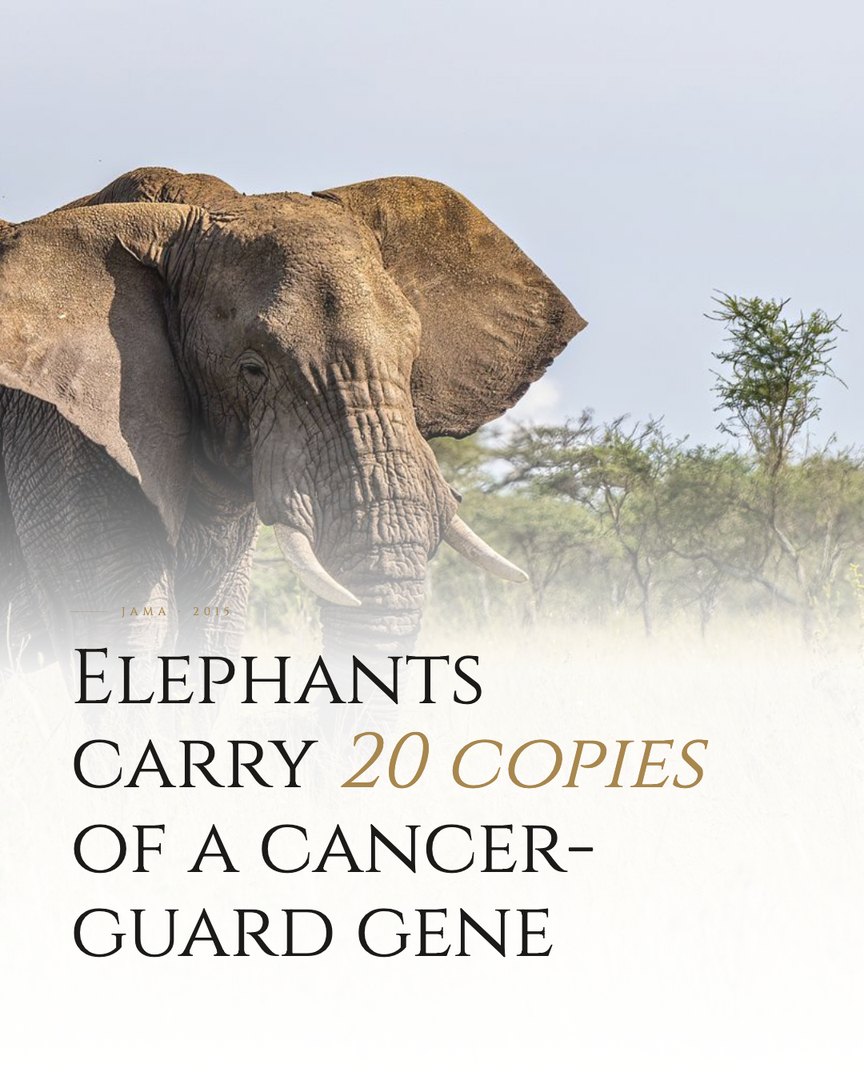
Elephants had an estimated cancer mortality under 5 percent, compared with 11 to 25 percent in humans. Humans carry one copy of the tumor-suppressor gene TP53, while African elephants carry at least 20 copies. Elephant blood cells exposed to radiation or chemotherapy died off at two to three times the rate of human cells.
More copies of TP53 appear to let elephant cells respond to DNA damage by dying rather than risking a cancerous mutation, trading some healthy tissue for a lower cancer rate overall. The comparison also showed that cancer mortality does not rise with body size or lifespan across mammals generally, a pattern called Peto's paradox that elephants help explain. The findings need replication before any of it can inform human treatment.
Read the original study
Abegglen et al., JAMA, 2015 · doi.org/10.1001/jama.2015.13134
Twenty genetic copies against the odds of cancer.
Source
- Abegglen, L. M., Caulin, A. F., Chan, A., Lee, K., Robinson, R., Campbell, M. S., Kiso, W. K., Schmitt, D. L., Waddell, P. J., Bhaskara, S., Jensen, S. T., Maley, C. C., & Schiffman, J. D. (2015). Potential Mechanisms for Cancer Resistance in Elephants and Comparative Cellular Response to DNA Damage in Humans. JAMA, 314(17), 1850–60. https://doi.org/10.1001/jama.2015.13134