
Researchers at the University of Michigan reviewed decades of clinical development data to trace exactly where drug candidates stall as they move from laboratory animals through the three phases of human trials.
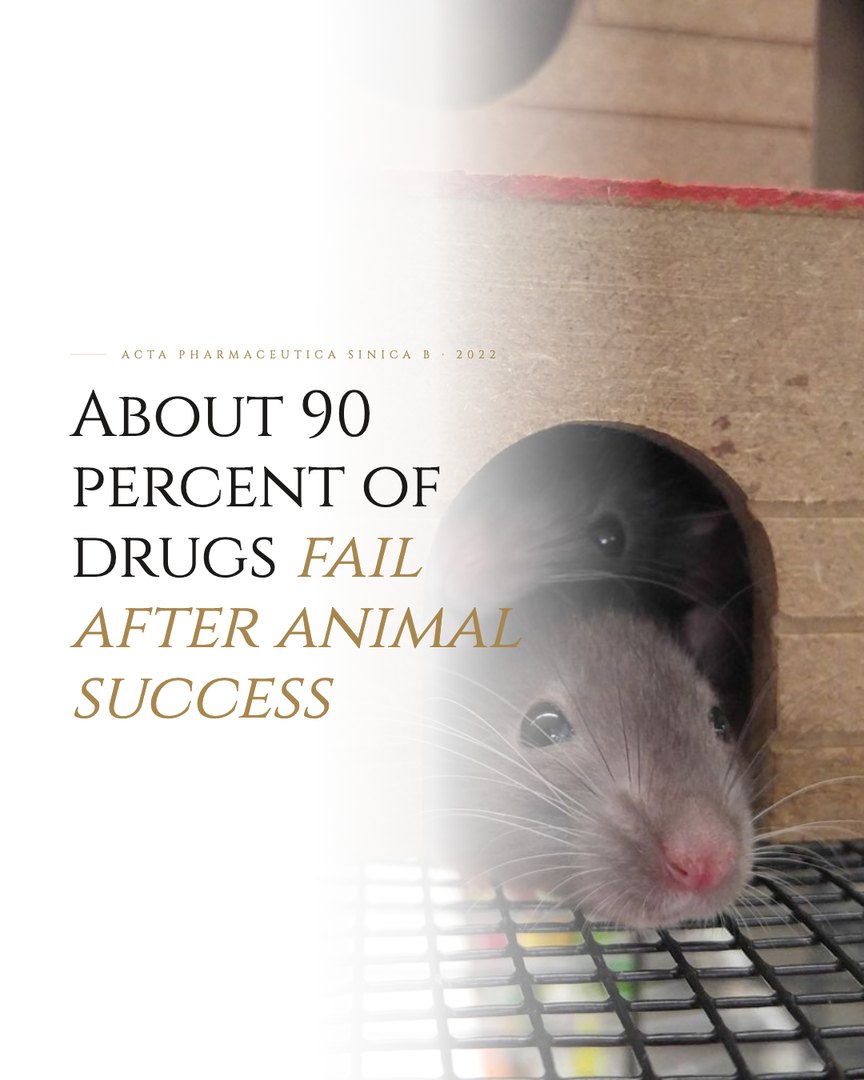
About 90 percent of drug candidates that enter human trials never reach approval, with many failing in Phase 2 or 3 after already appearing safe and effective in animal studies and early human safety testing. Insufficient efficacy and unexpected toxicity accounted for most of the losses, not manufacturing or regulatory issues.
The review traced the gap largely to differences between animal biology and human disease, along with trials too small or too short to catch rare side effects. The authors proposed matching treatments more precisely to molecular subtypes of disease as one way to raise the odds, an approach increasingly used in cancer drug development but still far from universal.
Read the original study
Sun et al., Acta Pharmaceutica Sinica B, 2022 · doi.org/10.1016/j.apsb.2022.02.002
Working in mice is the easy part.
Source
- Sun, D., Gao, W., Hu, H., & Zhou, S. (2022). Why 90% of clinical drug development fails and how to improve it? Acta Pharmaceutica Sinica B, 12(7), 3049–3062. https://doi.org/10.1016/j.apsb.2022.02.002