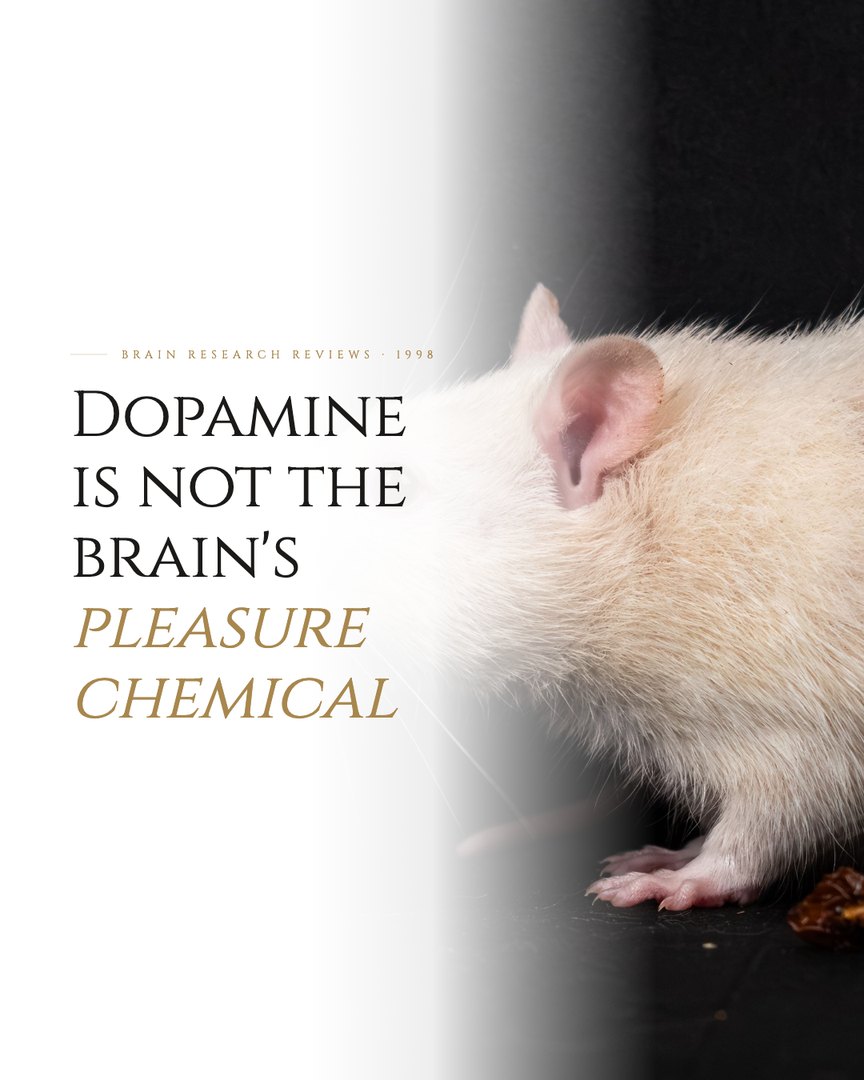
Researchers at the University of Michigan depleted nearly all forebrain dopamine in rats and found the animals still showed every normal sign of enjoying sugar, even though they would no longer work to get it.
Kent Berridge and Terry Robinson used a facial-reaction test developed to read taste pleasure in animals, the same lip and tongue movements rats show for sweet taste under normal conditions. Rats with their dopamine system chemically depleted showed those identical reactions to sucrose, while losing almost all motivation to seek the reward out on their own.
The split meant dopamine governs wanting, the drive to pursue a reward, separately from liking, the in-the-moment enjoyment of it. That distinction reframed addiction research, since drugs that hijack dopamine could create intense craving without necessarily increasing pleasure, which matched reports from people with addiction of wanting a drug they no longer enjoyed. The theory has since been refined but not overturned.
Read the original study
Berridge and Robinson, Brain Research Reviews, 1998 · doi.org/10.1016/s0165-0173(98)00019-8
Wanting and liking turned out to be different.
Source
- Berridge, K. C., & Robinson, T. E. (1998). What is the role of dopamine in reward: hedonic impact, reward learning, or incentive salience? Brain Research Reviews, 28(3), 309–369. https://doi.org/10.1016/s0165-0173(98)00019-8