
Researchers at the University of Michigan and the University of Colorado analyzed cardiac procedure records from hospitals across Michigan, comparing daily heart attack counts after each spring and fall time change with expected levels.
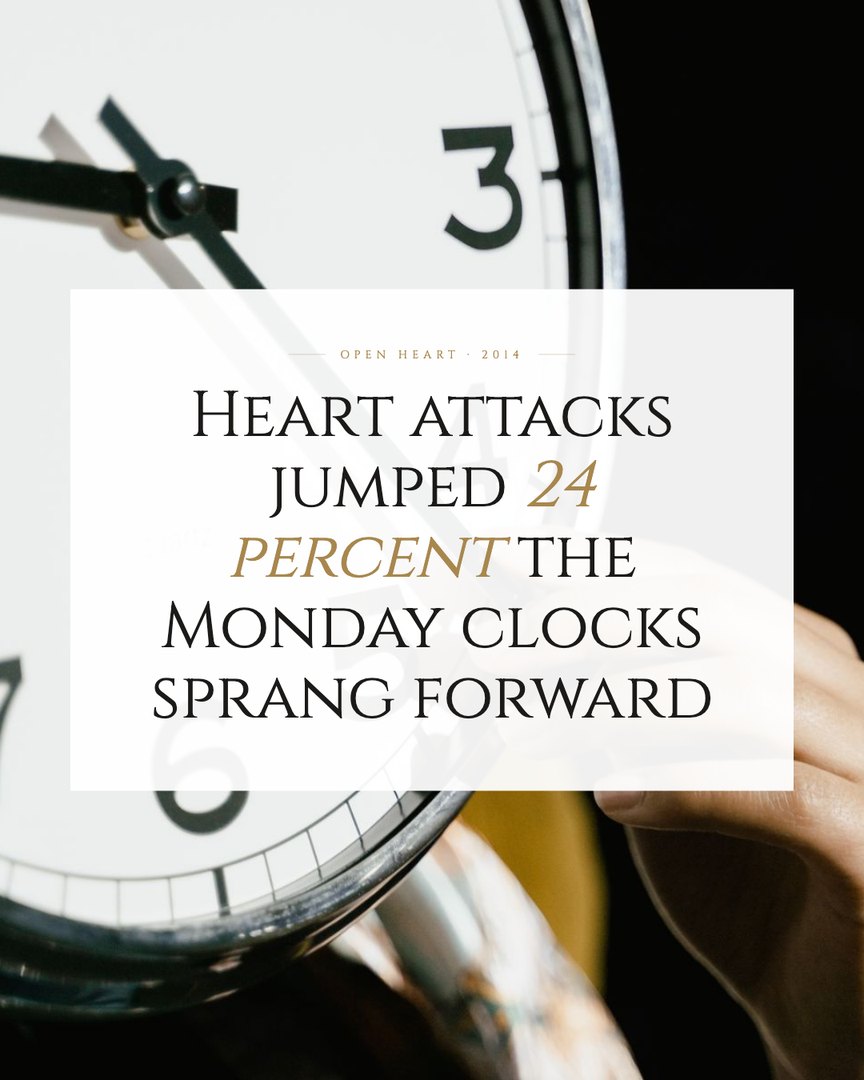
The Monday after clocks sprang forward in March showed a 24 percent increase in heart attacks treated with angioplasty, while the Tuesday after clocks fell back in the fall showed a 21 percent decrease, after adjusting for trend and season.
Total heart attacks across each week did not change, so the clock shift seemed to move when attacks happened rather than how many occurred, and the data came from one state over three and a half years. It joined earlier, smaller reports of the same pattern in other countries, feeding into debates over whether seasonal clock changes are worth the disruption they cause.
Read the original study
Sandhu et al., Open Heart, 2014 · doi.org/10.1136/openhrt-2013-000019
One lost hour, a spike in heart attacks.
Source
- Sandhu, A., Seth, M., & Gurm, H. S. (2014). Daylight savings time and myocardial infarction. Open Heart, 1(1), e000019. https://doi.org/10.1136/openhrt-2013-000019