
Researchers at ETH Zurich and University Hospital Basel tracked circulating tumor cells in breast cancer patients and in mice, timing blood draws to the active and resting phases of the daily cycle.
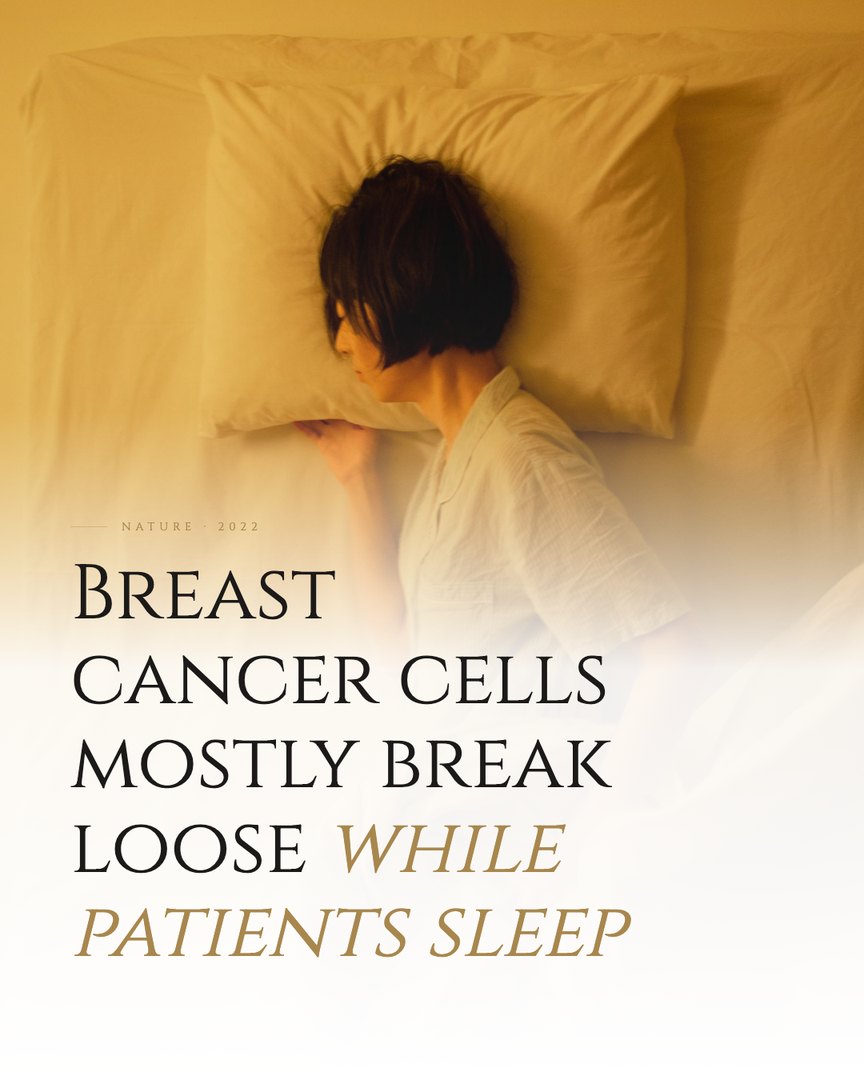
Most circulating tumor cells entered the bloodstream during the rest phase, meaning overnight in people and during daytime rest in mice, and these rest-phase cells were far more capable of forming new metastases than cells that entered circulation during the active phase, with hormones tied to the body's daily rhythm appearing to drive both effects.
The human finding came from a small, single-institution group of patients and still needs replication in larger and more diverse groups before it can change clinical practice. But if the pattern holds, the time of day a blood sample or scan is taken could matter for how accurately doctors track metastatic risk, and sleep itself may be a more active period for cancer biology than researchers had assumed.
Read the original study
Diamantopoulou et al., Nature, 2022 · doi.org/10.1038/s41586-022-04875-y
The most dangerous hour might be bedtime.
Source
- Diamantopoulou, Z., Castro-Giner, F., Schwab, F. D., Foerster, C., Saini, M., Budinjas, S., Strittmatter, K., Krol, I., Seifert, B., Heinzelmann-Schwarz, V., Kurzeder, C., Rochlitz, C., Vetter, M., Weber, W. P., & Aceto, N. (2022). The metastatic spread of breast cancer accelerates during sleep. Nature, 607(7917), 156–162. https://doi.org/10.1038/s41586-022-04875-y