
Researchers including biologists at the University of Texas Health Science Center reported a recapture from a Siberian banding program in which researchers had been tagging wild bats since the 1960s.
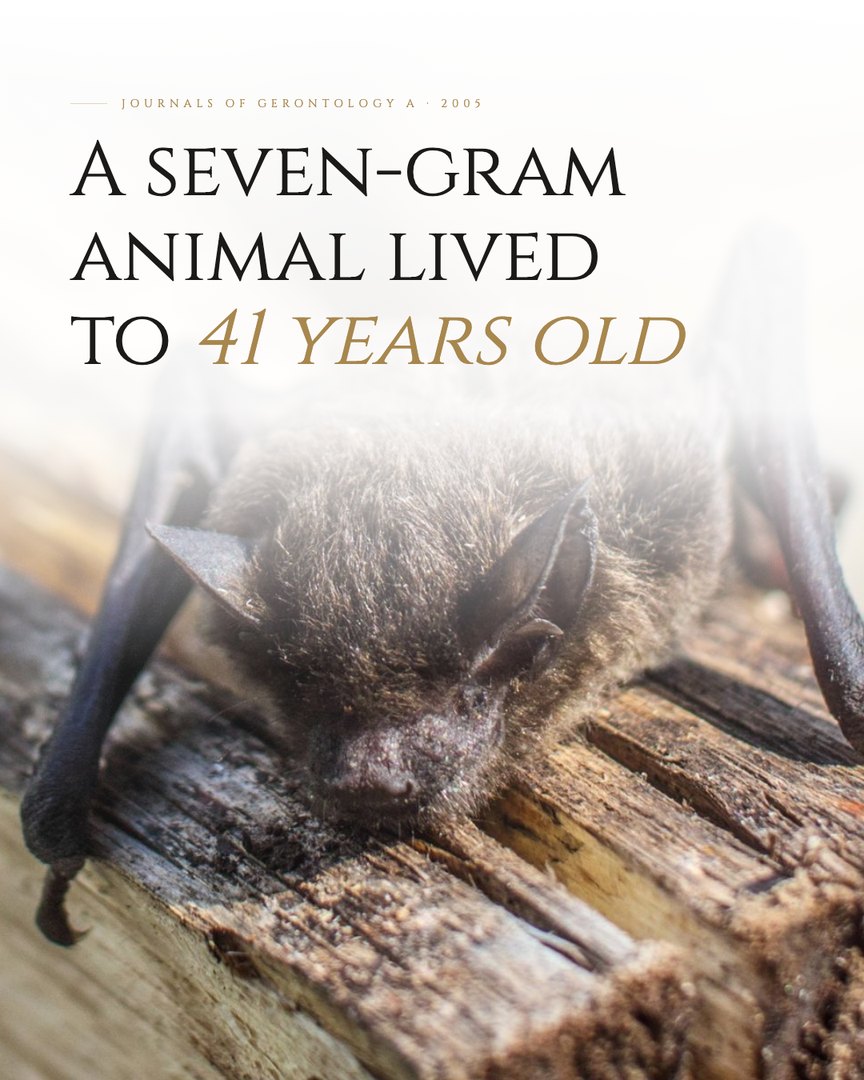
One recaptured animal, a male Brandt's bat weighing about seven grams, turned up alive at an estimated 41 years old, setting a new longevity record for any bat and for any mammal of its tiny size. Pound for pound, the animal had outlived what its body size would predict by a wide margin.
The finding placed Brandt's bat alongside naked mole rats and a handful of other small, long-lived mammals whose lifespans defy the usual size-to-longevity rule, and researchers studying slow aging increasingly treat bats as a natural model worth understanding. A single wild animal's age cannot explain the underlying biology on its own, and what protects bat cells from the usual wear of aging is still being worked out.
Read the original study
Podlutsky et al., Journals of Gerontology Series A, 2005 · doi.org/10.1093/gerona/60.11.1366
Seven grams, forty-one years, one small animal.
Source
- Podlutsky, A. J., Khritankov, A. M., Ovodov, N. D., & Austad, S. N. (2005). A new field record for bat longevity. The Journals of Gerontology, Series A, 60(11), 1366–8. https://doi.org/10.1093/gerona/60.11.1366