
Physicians at the Institute for Hormonal Balance in Orlando reviewed the charts of patients given intra-articular BPC-157 for knee pain, publishing the results as a retrospective case series rather than a controlled trial, the weakest tier of clinical evidence.
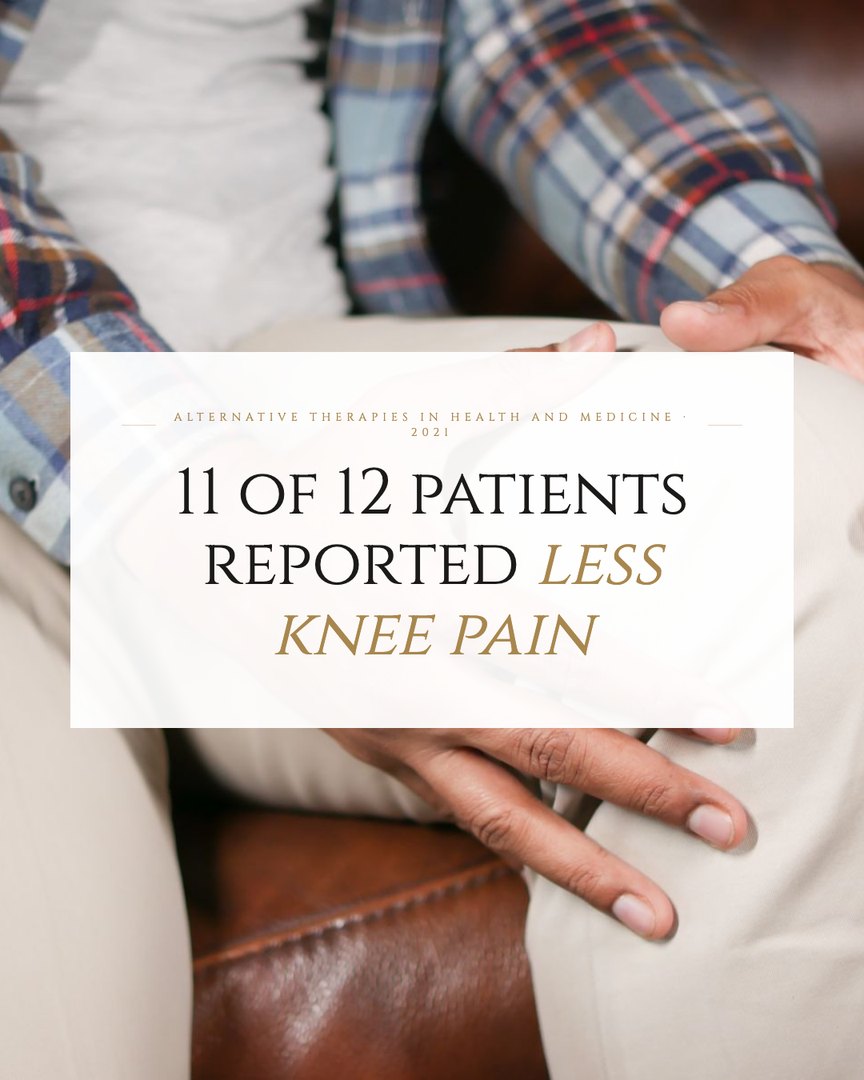
In the peer-reviewed case series, 12 of 16 patients reached by phone received BPC-157 alone, and 11 of those 12 reported meaningful pain relief at 6 to 12 months of follow-up. There was no placebo group, no blinding, and no independent confirmation; the clinic simply reported what it saw in its own charts.
This is a single-clinic, unreplicated chart review, not a clinical trial, and it carries real limits: with no comparison group, some of the improvement could reflect time, physical therapy, or simply a wish to report good news. BPC-157 is not an approved drug for any human use, and a report like this is a hypothesis for a future trial to test, not evidence that the injection works.
Read the original study
Lee and Padgett, Alternative Therapies in Health and Medicine, 2021 · PubMed 34324435
A hunch worth testing, not proof.
Source
- Lee, E., & Padgett, B. (2021). Intra-Articular Injection of BPC 157 for Multiple Types of Knee Pain. Alternative Therapies in Health and Medicine, 27(4), 8–13. https://pubmed.ncbi.nlm.nih.gov/34324435/