
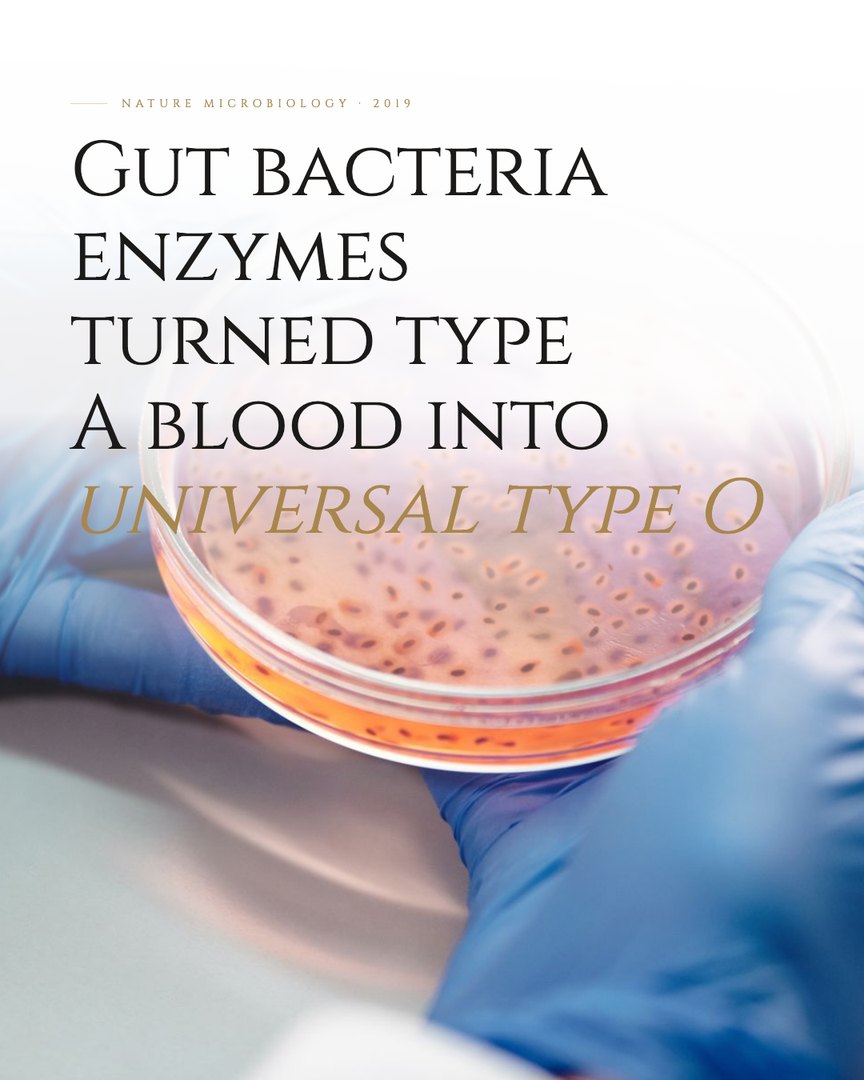
In 2019, biochemists at the University of British Columbia, screening enzymes from bacteria that live in the human gut, found two that worked together in a laboratory dish to strip the sugar markers that make blood type A, turning it into type O.
The pair of enzymes came from Flavonifractor plautii, a bacterium that lives in the human gut and feeds on sugar coatings like those on red blood cells. Applied to donated type A blood in test tubes, the enzymes stripped the A marker more efficiently than earlier candidates, leaving cells that behaved like type O.
The work, led by chemist Stephen Withers, stayed inside test tubes and laboratory dishes; it has not been tried in a transfusion. Turning donated blood of any type into a universal type would ease shortages and simplify matching, but enzyme treated blood still needs safety testing and regulatory approval before it could reach a blood bank or a patient.
Read the original study
Rahfeld et al., Nature Microbiology, 2019 · doi.org/10.1038/s41564-019-0469-7
Gut bacteria may fix blood shortages.
Source
- Rahfeld, P., Sim, L., Moon, H., Constantinescu, I., Morgan-Lang, C., Hallam, S. J., Kizhakkedathu, J. N., & Withers, S. G. (2019). An enzymatic pathway in the human gut microbiome that converts A to universal O type blood. Nature Microbiology, 4(9), 1475–1485. https://doi.org/10.1038/s41564-019-0469-7