
Researchers at Duke-NUS Medical School in Singapore compared how immune cells from bats, mice, and humans reacted when exposed to the same viruses, looking specifically at a sensor called the NLRP3 inflammasome that normally triggers inflammation.
Ahn's team found bat immune cells showed a dampened NLRP3 response, far weaker than the same sensor in mouse or human cells exposed to influenza, Melaka virus, or MERS coronavirus. The muted inflammation did not let viruses multiply more than usual, suggesting bats can carry similar viral loads with less of the damage excess inflammation causes.
Researchers linked the altered NLRP3 structure to a broader pattern of dampened inflammation across bat biology that some scientists connect to their unusually long lifespans for their body size. The work was done on cells outside the animal, in laboratory dishes, so how the muted response plays out during a live infection inside a bat's body is still being studied.
Read the original study
Ahn et al., Nature Microbiology, 2019 · doi.org/10.1038/s41564-019-0371-3
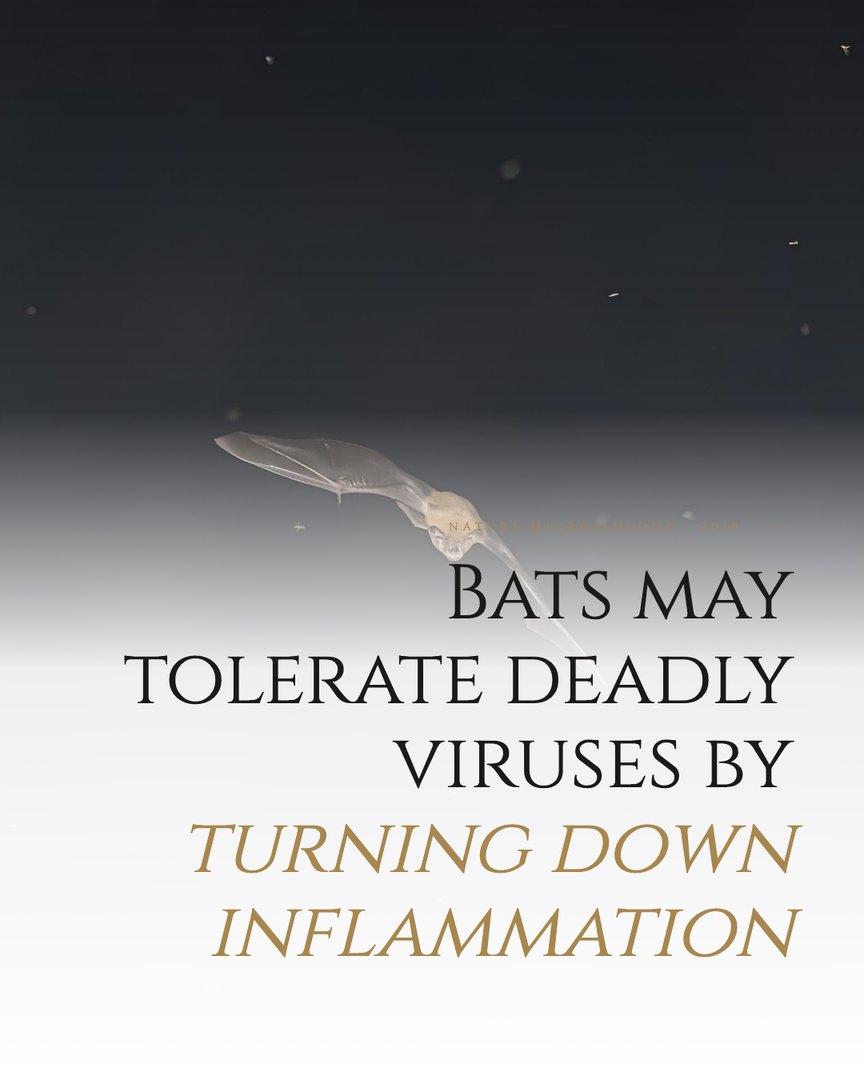
Bats may host deadly viruses partly by not overreacting.
Source
- Ahn, M., Anderson, D. E., Zhang, Q., Tan, C. W., Lim, B. L., Luko, K., Wen, M., Chia, W. N., Mani, S., Wang, L. C., Ng, J. H. J., Sobota, R. M., Dutertre, C.-A., Ginhoux, F., Shi, Z.-L., Irving, A. T., & Wang, L.-F. (2019). Dampened NLRP3-mediated inflammation in bats and implications for a special viral reservoir host. Nature Microbiology, 4(5), 789–799. https://doi.org/10.1038/s41564-019-0371-3