
After researchers at the University of Exeter described a man who lost his mind's eye following a heart procedure, 21 people wrote in to say they had never been able to picture images at all. This paper studied them.
The team named the lifelong inability to form mental images aphantasia, giving a name to a trait that had gone almost entirely undescribed in medicine despite likely always having existed.
Most of the newly identified group had assumed everyone else's mental pictures were as vague or absent as their own, since there is no outward sign of the difference and no one else's mind to compare against. Most led ordinary lives, and later surveys have estimated how common the trait is and begun mapping it onto differences visible on brain scans.
Read the original study
Zeman et al., Cortex, 2015 · doi.org/10.1016/j.cortex.2015.05.019
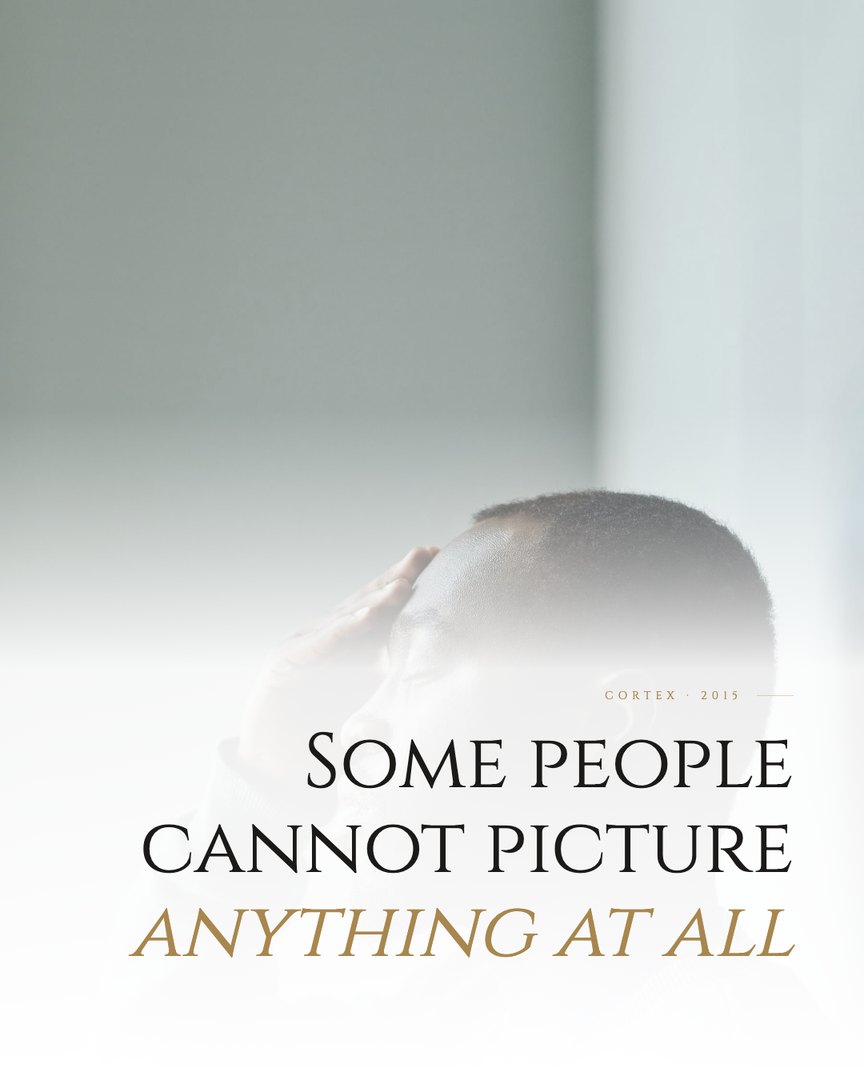
No picture at all, and no one ever knew.
Source
- Zeman, A., Dewar, M., & Della Sala, S. (2015). Lives without imagery - Congenital aphantasia. Cortex, 73, 378–80. https://doi.org/10.1016/j.cortex.2015.05.019