
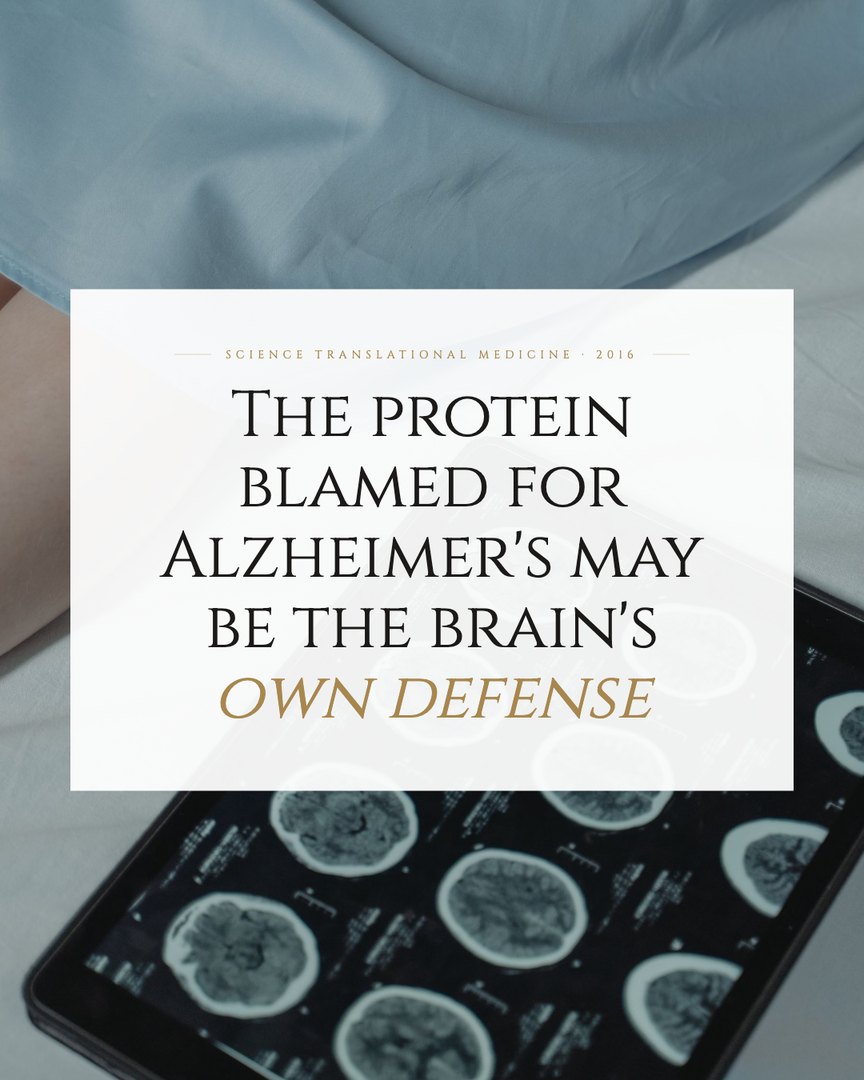
Researchers at Massachusetts General Hospital and Harvard Medical School found that amyloid-beta acts as a natural antimicrobial, trapping and killing microbes, and that mice and worms engineered to produce more of it survived infections better than normal animals.
Robert Moir and Rudolph Tanzi's team infected the brains of Alzheimer's model mice with bacteria, and model worms with yeast and bacteria, and found amyloid-beta fibers rapidly surrounded and trapped the microbes, much like other known antimicrobial peptides. Animals making extra amyloid-beta survived these infections more often than normal animals.
The finding reframed one leading hypothesis for why amyloid plaques form at all in Alzheimer's: as a defensive response to infection that becomes harmful when it runs unchecked over years. The work was done in animal models engineered to mimic the disease, and whether infection drives plaque formation in most human Alzheimer's cases, rather than in a subset, is still being investigated by multiple research groups.
Read the original study
Kumar et al., Science Translational Medicine, 2016 · doi.org/10.1126/scitranslmed.aaf1059
The suspect protein may be a defender.
Source
- Kumar, D. K. V., Choi, S. H., Washicosky, K. J., Eimer, W. A., Tucker, S., Ghofrani, J., Lefkowitz, A., McColl, G., Goldstein, L. E., Tanzi, R. E., & Moir, R. D. (2016). Amyloid-β peptide protects against microbial infection in mouse and worm models of Alzheimer’s disease. Science Translational Medicine, 8(340). https://doi.org/10.1126/scitranslmed.aaf1059