
An international collaboration led by researchers including Mohsen Naghavi analyzed deaths tied to bacterial antimicrobial resistance across 204 countries from 1990 to 2021, then built forecasts of the toll through 2050 under different intervention scenarios.
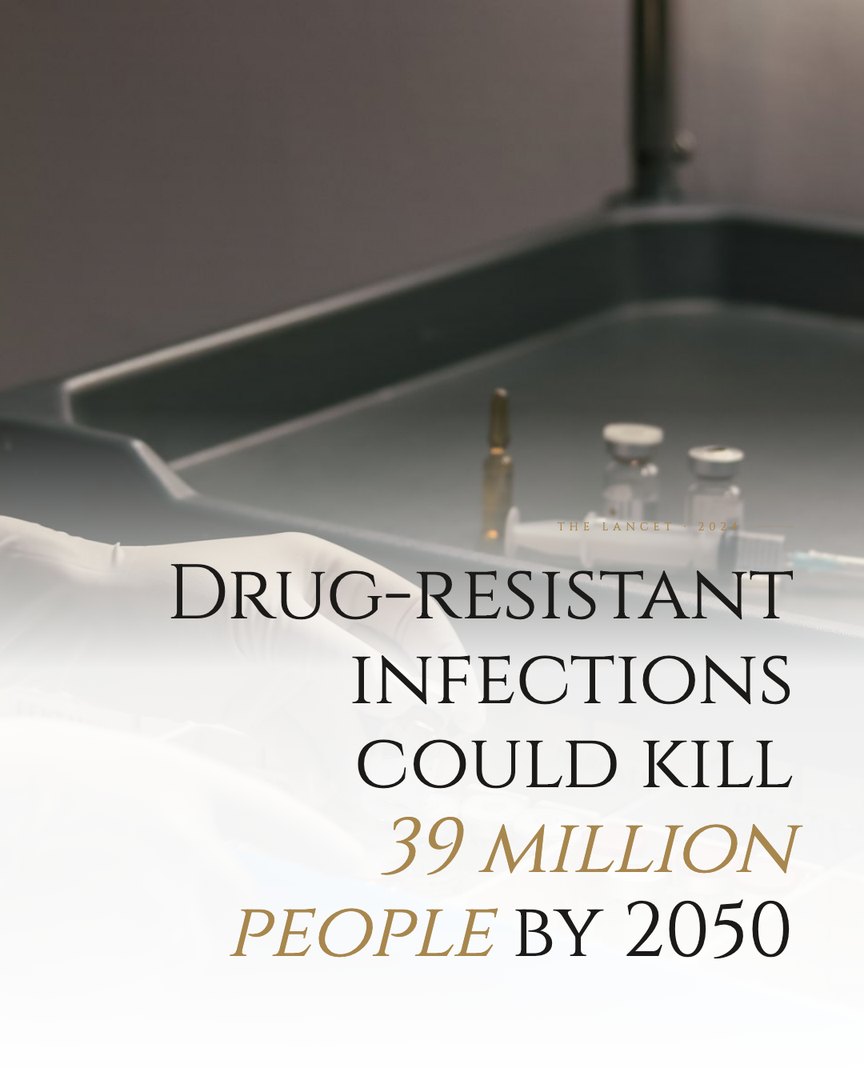
In 2021 alone, the team estimated 4.71 million deaths were associated with bacterial resistance, with 1.14 million directly attributable to it. Projecting the same trends forward, the researchers estimated about 39 million deaths directly attributable to resistance between 2025 and 2050, with the sharpest increases concentrated among adults over 70.
Deaths from resistant infections in children under five fell by more than half between 1990 and 2021, even as deaths in adults over 70 rose by over 80 percent. The forecasts are projections built on current trends and uneven data across countries, not a fixed fate: better care alone could avert about 92 million resistance-related deaths, and new antibiotics about 11 million.
Read the original study
Naghavi et al., The Lancet, 2024 · doi.org/10.1016/S0140-6736(24)01867-1
The forecast is a warning, not a verdict.
Source
- GBD 2021 Antimicrobial Resistance Collaborators (2024). Global burden of bacterial antimicrobial resistance 1990-2021: a systematic analysis with forecasts to 2050. The Lancet, 404(10459), 1199–1226. https://doi.org/10.1016/S0140-6736(24)01867-1