
Researchers at the Buck Institute for Research on Aging gave mice a calcium salt form of the molecule, calcium alpha-ketoglutarate, starting in middle age and tracked how long they lived and how frail they became.
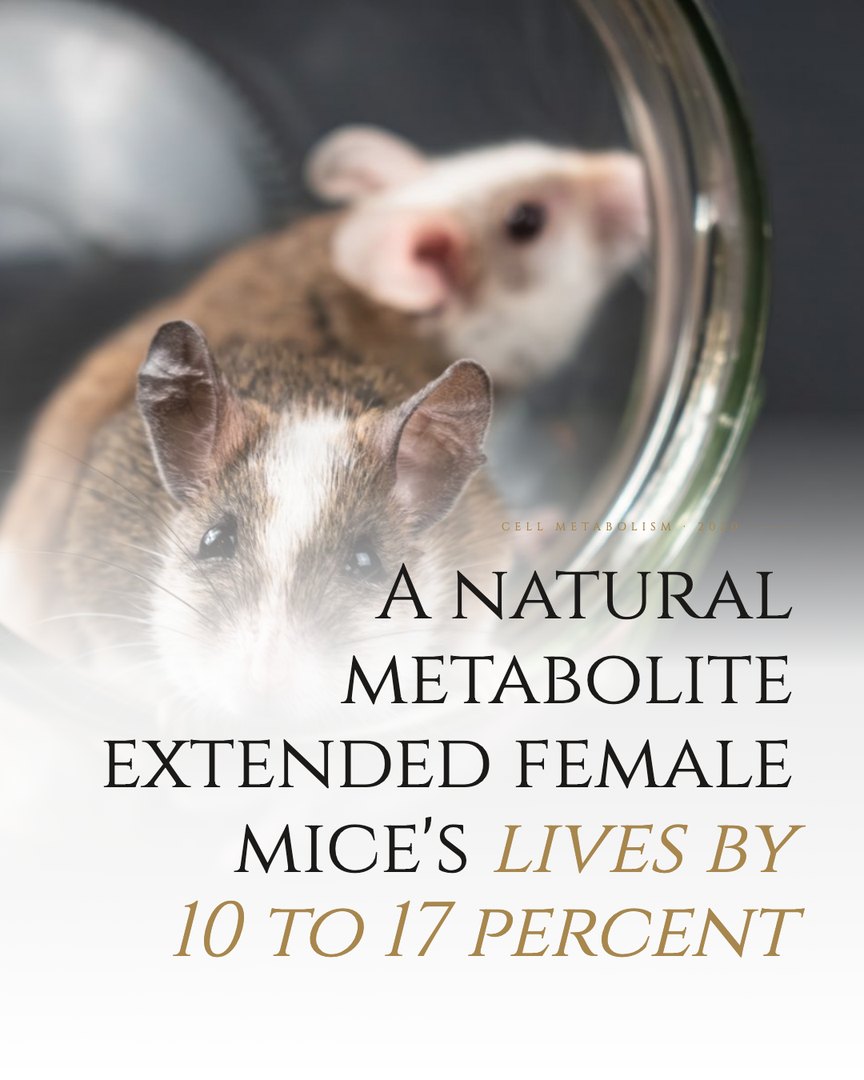
In two groups of female mice, median lifespan rose by 16.6 and 10.5 percent over untreated females. Both sexes showed a reduced frailty index, and treated females had lower levels of several inflammatory signals as they aged.
The lifespan gain was significant only in females, and the authors proposed that a rise in IL-10, an anti-inflammatory signal, accounted for much of the effect. The compound is already sold as a supplement, but the dosing and form used in aging mice has not been tested in a long-term human trial.
Read the original study
Asadi Shahmirzadi et al., Cell Metabolism, 2020 · doi.org/10.1016/j.cmet.2020.08.004
An ordinary metabolite, extending mouse lives.
Source
- Asadi Shahmirzadi, A., Edgar, D., Liao, C.-Y., Hsu, Y.-M., Lucanic, M., Asadi Shahmirzadi, A., Wiley, C. D., Gan, G., Kim, D. E., Kasler, H. G., Kuehnemann, C., Kaplowitz, B., Bhaumik, D., Riley, R. R., Kennedy, B. K., & Lithgow, G. J. (2020). Alpha-Ketoglutarate, an Endogenous Metabolite, Extends Lifespan and Compresses Morbidity in Aging Mice. Cell Metabolism, 32(3), 447–456.e6. https://doi.org/10.1016/j.cmet.2020.08.004