
That process is slow, costly, and the antibodies it yields are large, fragile molecules that need refrigeration few clinics in snakebite-prone regions reliably have. Researchers at the University of Washington's Institute for Protein Design set out to build something smaller and sturdier from scratch.
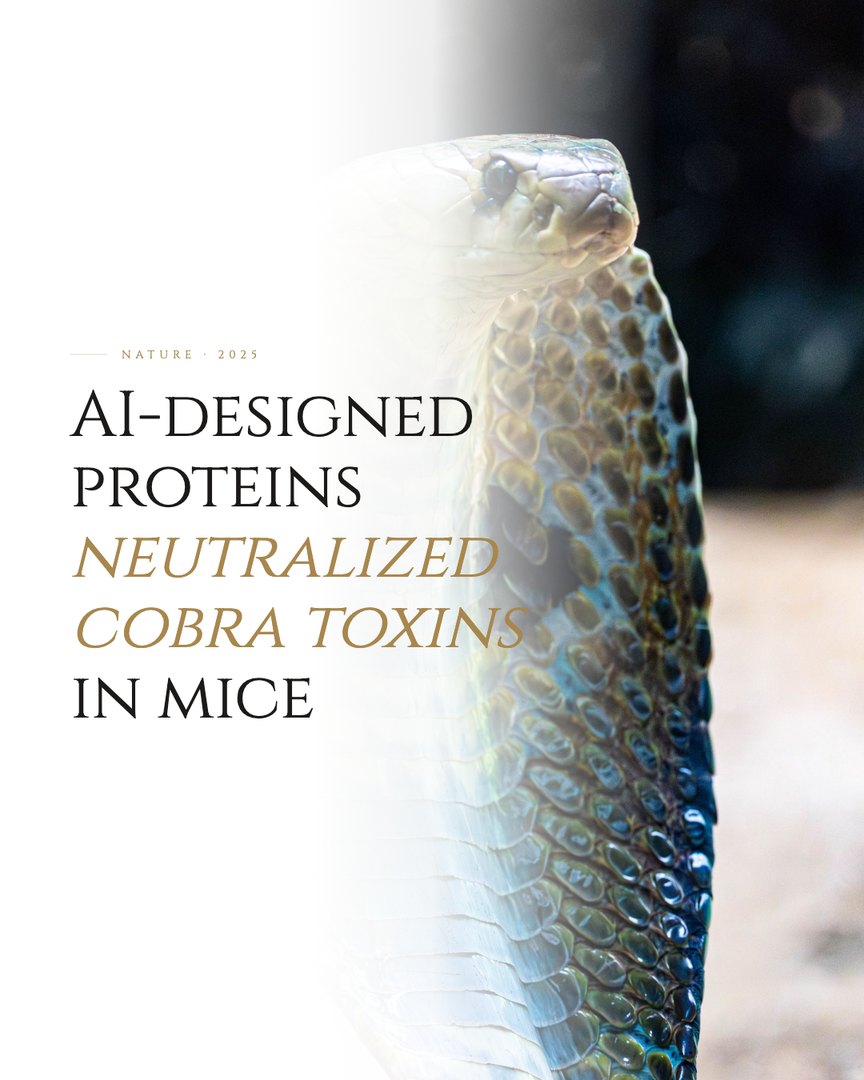
Using deep learning protein design tools, the team generated small proteins engineered to bind and block the three-finger toxins found in cobra and other elapid venoms. Mice given a lethal dose of purified toxin along with the designed proteins survived, after only limited lab screening and computational refinement of the designs.
The designed proteins can be produced cheaply in bacteria and are heat-stable enough that they might ease the cold chain that limits where animal-derived antivenom can be used. They have only been tested against toxin challenge in mice, not a live snakebite in a person, and elapid venom is complex, so a full antivenom would likely need several designed proteins working together.
Read the original study
Vázquez Torres et al., Nature, 2025 · doi.org/10.1038/s41586-024-08393-x
A computer designed what a horse used to make.
Source
- Vázquez Torres, S., Benard Valle, M., Mackessy, S. P., Menzies, S. K., Casewell, N. R., Ahmadi, S., Burlet, N. J., Muratspahić, E., Sappington, I., Overath, M. D., Rivera-de-Torre, E., Ledergerber, J., Laustsen, A. H., Boddum, K., Bera, A. K., Kang, A., Brackenbrough, E., Cardoso, I. A., Crittenden, E. P., . . . Baker, D. (2025). De novo designed proteins neutralize lethal snake venom toxins. Nature, 639(8053), 225–231. https://doi.org/10.1038/s41586-024-08393-x