
Physicians at Cedars-Sinai Medical Center ran a blinded trial comparing an AI model against trained sonographers on the same task, without telling the reviewing cardiologists which initial reading came from a person and which came from software.
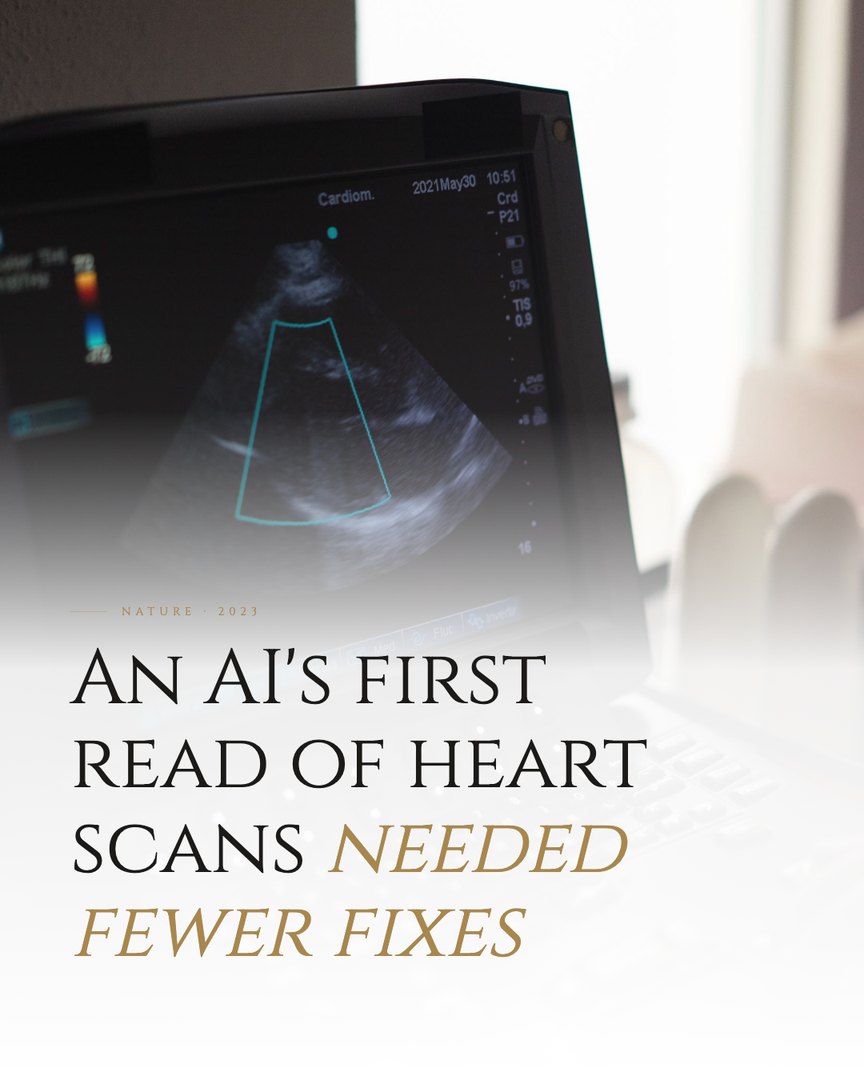
Across 3,495 echocardiograms, cardiologists substantially changed 16.8 percent of the AI's initial readings of pumping function, against 27.2 percent of the sonographers' readings, and they could not tell which first reading came from software.
The AI-guided workflow also saved time for both sonographers and cardiologists. The model had been trained on recordings from a different hospital system, Stanford Healthcare, and still held up on patients it had never seen.
Read the original study
He et al., Nature, 2023 · doi.org/10.1038/s41586-023-05947-3
Neither side could tell which read was human.
Source
- He, B., Kwan, A. C., Cho, J. H., Yuan, N., Pollick, C., Shiota, T., Ebinger, J., Bello, N. A., Wei, J., Josan, K., Duffy, G., Jujjavarapu, M., Siegel, R., Cheng, S., Zou, J. Y., & Ouyang, D. (2023). Blinded, randomized trial of sonographer versus AI cardiac function assessment. Nature, 616(7957), 520–524. https://doi.org/10.1038/s41586-023-05947-3